
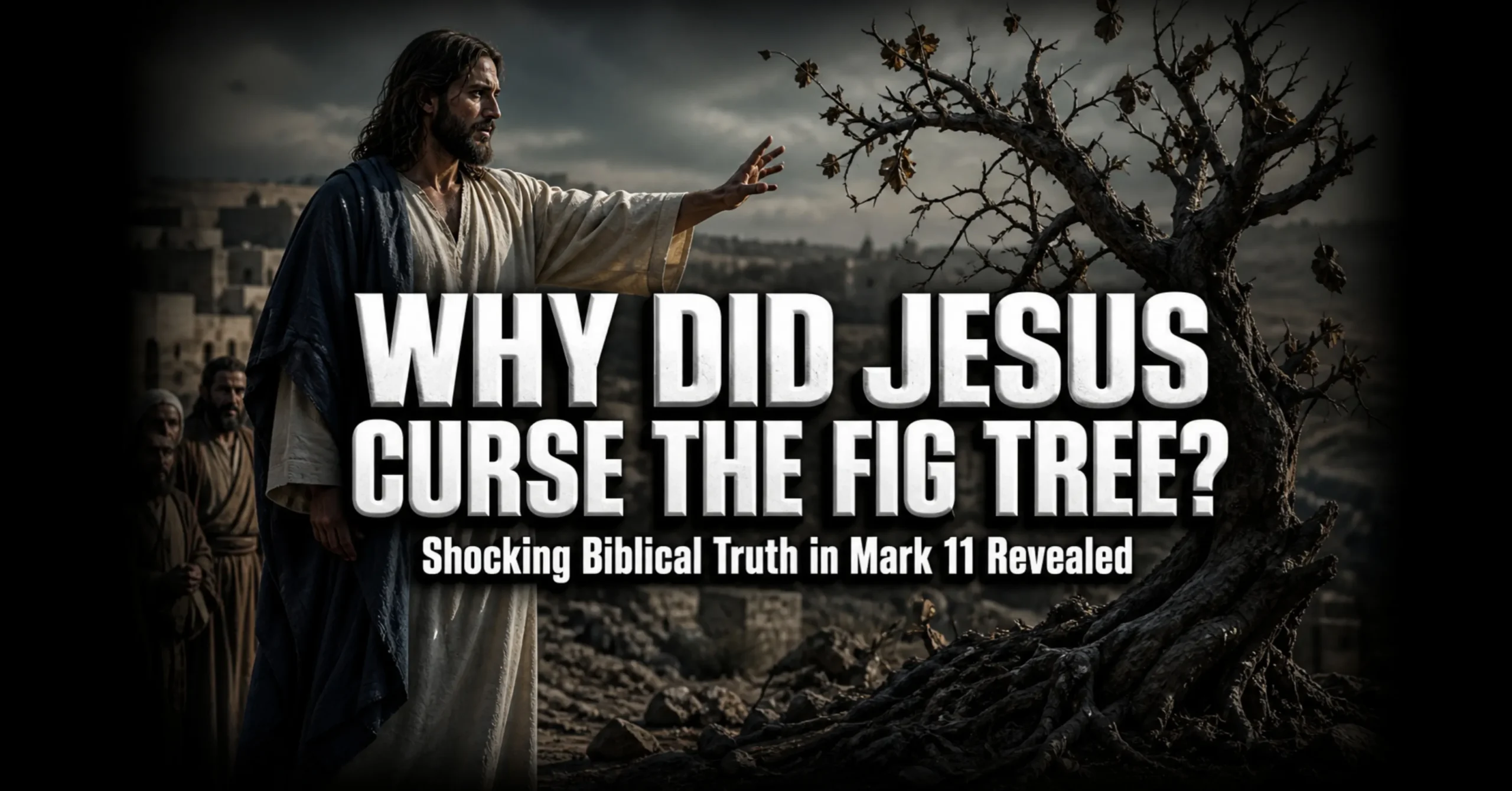
The question why did Jesus curse the fig tree in Mark 11 has puzzled readers for centuries because it seems unusual compared to His other miracles of healing and restoration. In this passage, Jesus encounters a fig tree with leaves but no fruit and pronounces a curse on it. At first glance, it looks like an emotional reaction, but the deeper meaning reveals a powerful spiritual lesson about faith, authenticity, and spiritual fruitfulness.
This event is not just about a tree it is a symbolic act connected to God’s expectations from His people. Understanding why did Jesus curse the fig tree in Mark 11 helps uncover themes of true faith versus outward appearance, and why spiritual life must produce real “fruit,” not just leaves.]
The Fig Tree Incident in Mark 11 Explained
What happened in Mark 11:12–14
In Mark 11, Jesus is traveling with His disciples and sees a fig tree covered with leaves but bearing no fruit. The text specifically highlights that there was no fruit “because it was not the season for figs.” Still, Jesus approaches the tree expecting fruit, finds none, and says, “May no one ever eat fruit from you again.” Immediately, the disciples hear this declaration.
This moment is central to understanding why did Jesus curse the fig tree in Mark 11. On the surface, it looks surprising because the timing seems unfair. However, the action is not about agricultural timing but about a deeper spiritual message hidden in the symbolism of the fig tree.
Why this action shocked the disciples
The disciples were likely confused because Jesus had performed miracles of healing and restoration, not destruction. Cursing a tree appeared unusual and unexpected.
This shock was intentional from a teaching perspective:
- It created a moment that demanded reflection
- It pointed beyond the physical event to a spiritual truth
- It prepared them for a deeper lesson about faith and fruitfulness
The contrast between the tree’s appearance (leaves) and its reality (no fruit) becomes the key foundation for the entire teaching that follows in the passage.
Why Did Jesus Curse the Fig Tree? (Literal & Spiritual Meaning)
Symbol of outward appearance without fruit
To understand why did Jesus curse the fig tree, we need to go beyond the surface event and look at its symbolic meaning. The fig tree had leaves, which normally signal that fruit should be present. But in this case, there was only appearance without reality.
This becomes a powerful spiritual picture. The tree represents something that looks alive and promising but is actually empty inside. Jesus uses this moment to highlight a deeper truth: God is not impressed by outward appearance alone. What matters is real spiritual fruit evidence of genuine faith, obedience, and transformation.
Spiritual warning behind the act
The act of cursing the fig tree is not random or emotional. It serves as a prophetic warning. In the broader biblical context, the fig tree often represents Israel and, more broadly, religious life that should produce righteousness.
Here, Jesus is exposing a serious issue:
- A system that looks spiritually active but lacks true obedience
- Religious appearance without real relationship with God
- External activity without internal transformation
This is why the moment is tied to judgment imagery rather than destruction. It communicates that empty religion cannot stand before God’s expectation of fruitfulness.
So, when readers ask why did Jesus cursed the fig tree in the Bible, the answer is not about anger toward a tree it is about a symbolic act revealing God’s standard for authentic spiritual life.
Meaning of the Fig Tree in the Bible
Fig tree as Israel symbol
To understand why did Jesus cursed the fig tree in the bible, we must look at how the fig tree is used throughout Scripture. In the Old Testament, the fig tree is often connected with the nation of Israel and its spiritual condition.
Israel was chosen to reflect God’s character in the world, just like a healthy fig tree is expected to produce fruit in its season. However, over time, there were moments when outward religious activity remained, but true obedience and righteousness were missing.
So, the fig tree becomes more than just a plant it becomes a symbol of spiritual responsibility and national faithfulness.
Fruitfulness as spiritual requirement
In the Bible, fruitfulness is not optional it is expected. God consistently looks for evidence of a transformed life, not just religious appearance.
When Jesus approaches the fig tree, it visually represents this expectation. The presence of leaves suggests life, but the absence of fruit reveals a deeper problem: a life that looks active but produces nothing meaningful spiritually.
This connects directly to the core meaning behind why did Jesus curse the fig tree in Mark 11. It is not about timing or nature it is about expectation. God desires:
- Genuine repentance
- Obedient living
- Visible spiritual growth
Without these, even a “leafy” appearance has no lasting value in God’s eyes.
Connection Between Fig Tree and Jesus’ Teaching on Faith
Faith that produces spiritual fruit
One of the deeper reasons behind why did Jesus curse the fig tree is to teach that real faith is always visible through its results. In the Bible, faith is never meant to remain only a belief in the mind it is expected to produce action, change, and spiritual growth.
The fig tree had leaves, which suggested life, but no fruit was found. This becomes a picture of faith that exists in words or appearance but does not show real transformation. Jesus uses this moment to show that true faith always produces “fruit” such as:
- Obedience to God’s will
- A changed character
- Love and righteousness in action
Without these, faith becomes incomplete and empty in practice.
Warning against empty religious practice
This event also serves as a strong warning against outward religion without inward reality. Many people in Jesus’ time (and even today) can appear spiritually active attending worship, speaking religious language, or following rituals yet still lack genuine connection with God.
The cursed fig tree becomes a living illustration of this problem:
- Leaves represent outward religious appearance
- No fruit represents absence of real spiritual life
This is why the teaching is closely connected to why did Jesus curse the fig tree in Mark 11. It highlights that God is not satisfied with appearance alone; He looks for real evidence of transformation.
The message is clear: spiritual life must go beyond visibility and become reality in action.
Key Lesson from the Fig Tree Story
God looks for fruit, not appearance
The central lesson behind why did Jesus curse the fig tree comes down to one clear truth: God values fruitfulness over appearance. The fig tree looked healthy from a distance, but up close it revealed emptiness. This gap between appearance and reality is exactly what Jesus was addressing.
In practical terms, this means:
- External actions alone are not enough
- Religious identity does not guarantee spiritual depth
- God examines the inner condition, not just outward behavior
The fig tree becomes a mirror, showing that it is possible to look spiritually alive while lacking real substance.
Spiritual self-check for believers
This story is not just about Israel or people in Jesus’ time it applies directly to believers today. It invites a personal reflection on whether faith is producing real, visible results.
A simple self-check includes:
- Is my faith changing how I live daily?
- Are my actions aligned with what I believe?
- Is there growth in character, obedience, and love?
Understanding why did Jesus curse the fig tree in Mark 11 pushes readers toward honest evaluation. It moves the focus from appearance to authenticity and from routine to transformation.
FAQs
Why did Jesus curse the fig tree in Mark 11?
It symbolized judgment on fruitless faith and outward religion without real obedience.
What does the fig tree represent in the Bible?
It often represents Israel or a believer’s spiritual condition and fruitfulness.
Was Jesus angry when He cursed the fig tree?
No, it was a symbolic act to teach a spiritual lesson, not emotional anger.
What lesson does the fig tree teach Christians today?
True faith must produce real spiritual fruit, not just outward appearance.
Why was the fig tree cursed if it wasn’t the season?
The focus was symbolic meaning, not natural timing it exposed spiritual emptiness.
Conclusion
The answer to why did Jesus curse the fig tree goes far beyond a simple event it reveals a deep spiritual truth about faith, authenticity, and fruitfulness. The fig tree stood as a symbol of outward appearance without real substance, reminding us that God looks for genuine transformation, not just external signs.
This teaching challenges every believer to move beyond surface-level faith and develop a life that produces real spiritual fruit. In the end, the message is clear: it’s not about how things look on the outside, but what truly grows within.

Juganta Kumbhar is a Christian pastor, blogger, and content creator who serves in ministry and a local church. He holds a postgraduate degree and has spent significant time writing and publishing Christian and Bible-related content across multiple websites. He also volunteers in social work, believing a life poured out for others is never wasted. He created ChristianPrayerLife to share the life of Christ honestly and warmly the way one friend talks to another hoping every reader who visits feels a little less alone and a little closer to God.