
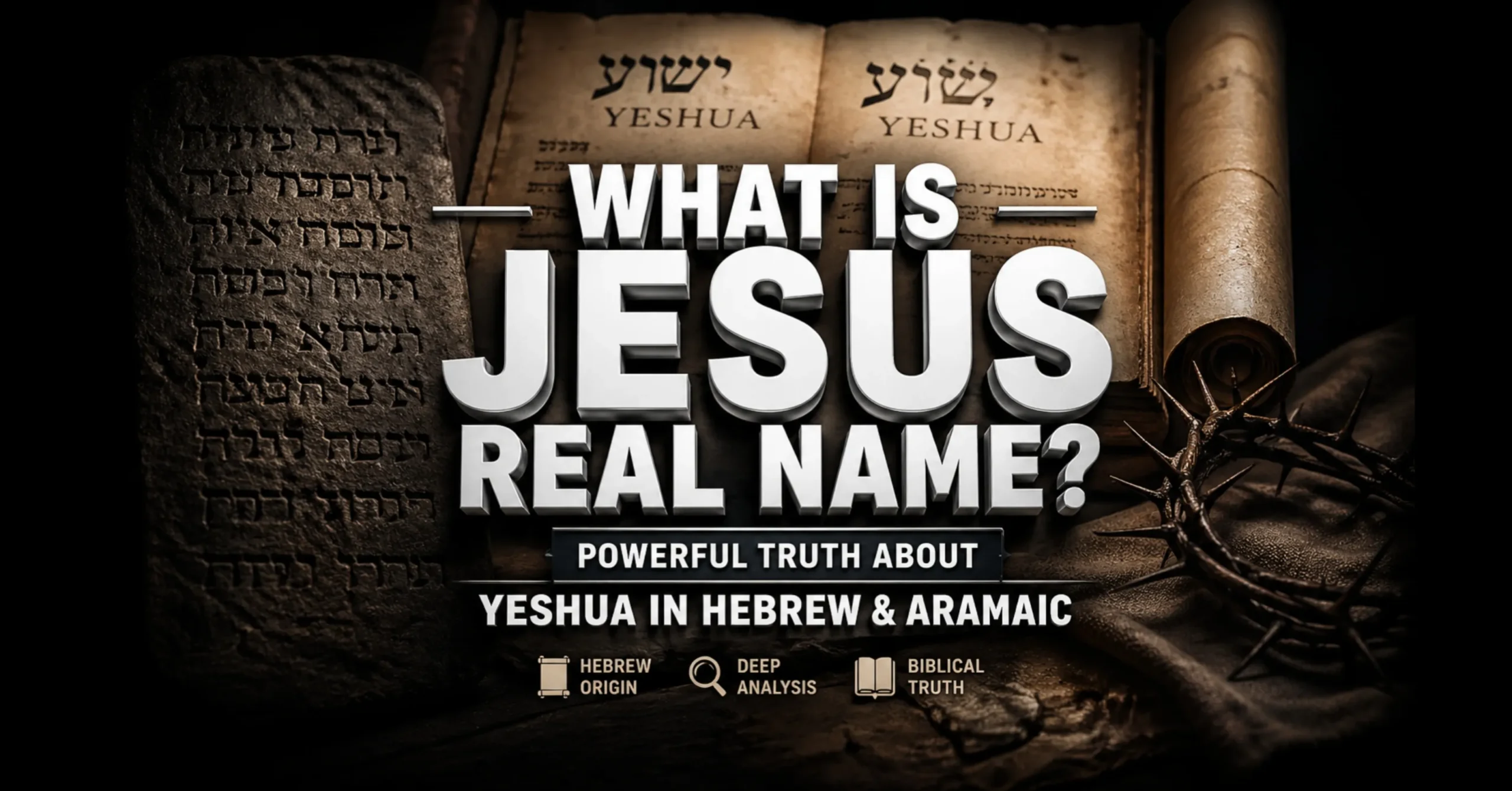
Many people search what is Jesus real name because they are confused by the different versions of His name in the Bible, history, and translations. Some know Him as Jesus, others as Jesus Christ, while some come across the Hebrew name Yeshua, which creates even more curiosity.
In reality, understanding the real name of Jesus is not just about language it is also about history, culture, and biblical translation. His original name was rooted in Hebrew and Aramaic long before it was translated into English.
In this article, we will clearly explain what is Jesus real name, its meaning in Hebrew and Aramaic, and why “Christ” is actually a title, not a last name.
What Is Jesus Real Name According to the Bible?
Many readers searching what is Jesus real name want a clear biblical answer without confusion. In the Bible, Jesus is connected to the Hebrew name Yeshua, which later became Iesous in Greek and finally “Jesus” in English.
The name “Jesus” is not modern it is a translated form that evolved through different languages. In its original context, it carries a deeper meaning tied to salvation and God’s purpose.
Biblical Origin of the Name Jesus
The name Jesus comes from the Hebrew Yeshua (ישוע), a shortened form of Yehoshua, meaning “God saves” or “The Lord is salvation.”
As the Bible was translated:
- Hebrew → Yeshua
- Greek → Iesous
- English → Jesus
This explains why the same name appears differently across languages.
What Is the Real Name of Jesus?
The most accurate historical answer is Yeshua. This was the name used in His real cultural and linguistic setting in 1st-century Judea.
“Jesus” is the English version, widely accepted today. Both refer to the same person, but Yeshua reflects the original Hebrew identity.
What Is Jesus Real Name in Hebrew?
When people search what is Jesus real name in Hebrew, they are looking for the original form of His name. In Hebrew, His name is Yeshua, which carries deep meaning and historical significance.
Meaning of Yeshua in Hebrew Context
Yeshua comes from Yehoshua, meaning:
- “Yahweh saves”
- “God is salvation”
Over time, Yehoshua was shortened to Yeshua for daily use, which was common in Hebrew culture.
Why Hebrew Name Matters
The Hebrew name reveals the original identity and mission of Jesus. It also removes confusion caused by translation differences across languages.
What Is Jesus Real Name in Aramaic?
To fully understand what is Jesus real name, we must consider Aramaic the everyday language spoken during His time.
In Aramaic, the name remains Yeshua, with slight pronunciation differences.
How Jesus’ Name Was Spoken in His Time
In daily life, people would say Yeshua, though pronunciation varied slightly depending on region and dialect.
Historical Language Background
- Aramaic = spoken language
- Hebrew = religious language
This explains why different forms exist but all trace back to Yeshua.
What Is Jesus Christ Real Name?
Many assume “Christ” is part of His name, but it is actually a title, not a surname.
Is “Christ” a Name or Title?
“Christ” comes from the Greek Christos, meaning:
- “Messiah”
- “Anointed One”
So “Jesus Christ” means “Jesus the Messiah.”
Difference Between Jesus and Jesus Christ
- Jesus = personal name (Yeshua)
- Christ = title
It is not a full name, but a name + title combination.
Does Jesus Have a Last Name?
No, Jesus did not have a last name.
Ancient Naming System Explained
People were identified as:
- Jesus of Nazareth
- Jesus, son of Joseph
Why Jesus Has No Last Name
Surnames did not exist at that time. Identity was based on:
- Family
- Location
- Lineage
Conclusion
Understanding what is Jesus real name gives deeper insight into history, language, and biblical truth. His original name, Yeshua, reflects His Hebrew roots and the message of salvation.
Key takeaways:
- Jesus = translated form of Yeshua
- Christ = title, not a last name
- No surnames in biblical times
This makes the identity of Jesus not just a linguistic topic, but a meaningful historical and spiritual understanding.

Hi, I’m Juganta Kumbhar — a blogger, content creator, and a believer who genuinely loves God.
I hold a postgraduate degree, but honestly, the most important thing I’ve learned didn’t come from a classroom. It came from faith. From prayer. From those quiet moments when God showed up in ways I never expected.
This blog started with one simple desire to share the life of Christ with others. Not in a complicated, religious way. Just honestly. Warmly. The way one friend talks to another.
I also believe in giving back. I do social work freely, because I’ve learned that a life poured out for others is never wasted. That’s not just something I write about it’s something I try to live every day.
Every prayer, every blessing, every word on this site is written with one hope that someone, somewhere, reads it and feels a little less alone and a little closer to God.
I’m glad you’re here. This place was made for you.
1 thought on “What Is Jesus Real Name? Powerful Truth About Yeshua in Hebrew & Aramaic”