
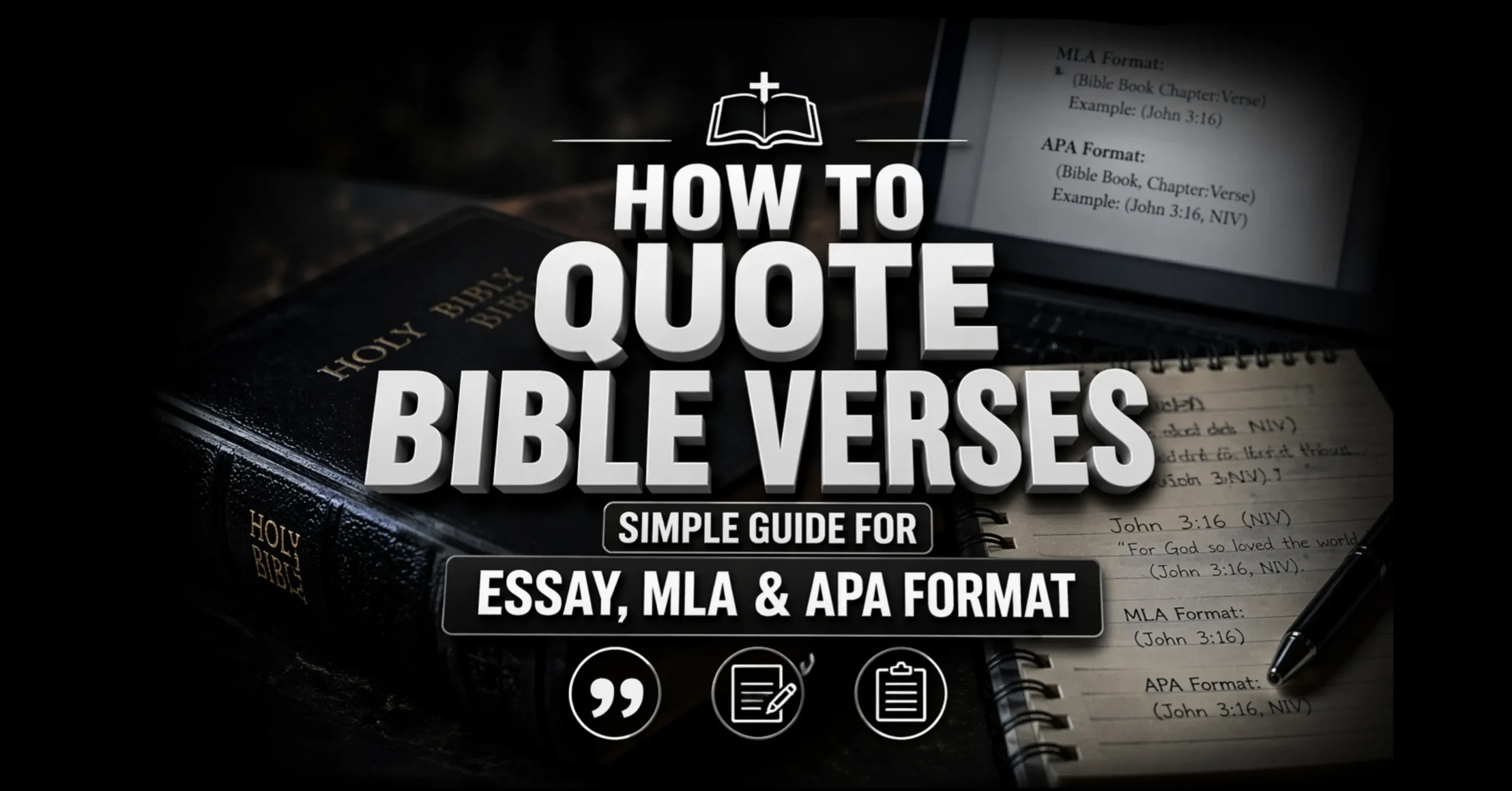
Quoting Bible verses correctly is important when you are writing essays, research papers, or any form of Christian-based content. Many people get confused about how to quote bible verses in the right format, especially when it comes to essays, MLA, or APA style. A small mistake in structure or citation can make your writing unclear or less credible.
In this guide, you will learn how to properly quote a Bible verse in a simple and practical way. We will break down the rules step by step, show you examples, and explain how to use Bible verses in academic writing. Whether you are a student or a writer, this guide will help you quote Scripture correctly and confidently.
What Does It Mean to Quote Bible Verses?
Quoting Bible verses simply means using the exact words from Scripture and presenting them correctly in your writing. When you quote bible verses, you are not rewriting or changing the meaning you are directly using the original text along with proper reference details like book name, chapter, and verse number.
This is commonly used in essays, sermons, devotional writing, and academic papers where accuracy matters. For example, instead of just mentioning an idea, you include the exact verse such as John 3:16 along with its wording. This helps maintain clarity, authority, and proper acknowledgment of the Bible as the source.
Basic Meaning of Quoting Scripture
Quoting Scripture means copying the exact verse from the Bible and placing it in your sentence with correct citation. It is different from paraphrasing, where you explain the meaning in your own words without using the exact text.
This helps readers understand the exact biblical message without confusion or alteration.
How to Properly Quote a Bible Verse (Step-by-Step Guide)
Quoting a Bible verse properly means following a clear and consistent format so that your writing stays accurate and easy to understand. Whether you are writing an essay, sermon, or article, using the correct structure helps maintain credibility and clarity.
The standard way to quote bible verses is to include the book name, chapter, and verse number, followed by the exact text and the translation (like NIV or ESV if required). You should always keep the wording exactly as it appears in the Bible without changing the meaning.
Step-by-Step Format Rules
To properly quote a Bible verse, follow these simple steps:
- First, mention the Book name (example: John)
- Next, add chapter and verse number (example: 3:16)
- Then, place the verse in quotation marks
- Finally, include the translation if needed (NIV, KJV, ESV)
Example structure: John 3:16 – “For God so loved the world…” (NIV)
This format keeps your writing clean and academically correct.
Common Formatting Mistakes
Many writers make small mistakes when quoting Bible verses, such as:
- Missing chapter or verse numbers
- Changing the original wording
- Forgetting quotation marks
- Not mentioning translation when required
Avoiding these mistakes ensures your writing stays professional and accurate.
How to Quote a Bible Verse in an Essay
When you write an essay, quoting a Bible verse requires clarity and proper academic structure. The goal is to include Scripture in a way that supports your point without breaking essay flow or citation rules. This is especially important in school, college, or research writing where formatting matters.
To quote bible verses in an essay, you should introduce the verse naturally in your sentence and then provide the book, chapter, and verse reference. The verse itself should be placed in quotation marks, followed by the appropriate citation style depending on your requirement.
In-Text Citation Basics
In essay writing, a Bible verse is usually included within the sentence or at the end of it. You should:
- Introduce the verse in context
- Add the exact Scripture in quotation marks
- Mention book, chapter, and verse clearly
Example structure (conceptual):
You can write a sentence and then include the verse reference like John 3:16 at the end.
This keeps your essay clean and academically acceptable.
Academic Writing Rules
When using Bible verses in essays, follow these important rules:
- Do not overuse verses in one paragraph
- Maintain formal academic tone
- Be consistent with citation style
- Always ensure accuracy of reference
Proper usage of Scripture improves the quality and credibility of your essay.
MLA and APA Bible Verse Citation
When you are writing academic papers, different citation styles like MLA and APA have specific rules for quoting Bible verses. These formats ensure that your references are standardized and accepted in educational and research writing. The main difference lies in how the verse is presented and documented in the reference section.
Understanding these formats is important if you want to properly quote bible verses in essays, assignments, or research papers.
MLA Format Rules
In MLA style, Bible verses are usually quoted within the text and do not require a full bibliography entry like books or journals.
You should:
- Mention the book name, chapter, and verse
- Keep the translation optional depending on instructor requirements
- Use clear in-text citation format
Example structure (conceptual):
John 3:16 (NIV) or “For God so loved the world…” (John 3:16)
This keeps the citation simple and readable in MLA writing.
APA Format Rules
In APA style, Bible citations are also included in-text but follow a slightly more structured approach depending on the edition or translation used.
You should:
- Include book, chapter, and verse in the sentence or parenthesis
- Mention translation if required
- Keep formatting consistent throughout the document
Example structure (conceptual):
(John 3:16, New International Version)
APA focuses more on consistency and clarity in academic writing.
Bible Verse Example (Quick Understanding)
Seeing a real example makes it much easier to understand how to quote bible verses correctly in writing. Instead of only learning rules, examples help you apply the format in essays, assignments, or any written content.
When you quote a Bible verse, the key is to keep the original wording unchanged and present it with proper reference details like book name, chapter, and verse number. This ensures clarity and accuracy in your writing.
Simple Example Format
A properly quoted Bible verse looks like this in practice:
You can write a sentence in your essay and include the verse like: “For God so loved the world that he gave his one and only Son…” (John 3:16, NIV).
In this format:
- The verse is placed inside quotation marks
- The book (John), chapter (3), and verse (16) are clearly mentioned
- The translation (NIV) is added for clarity
This structure is commonly used in both academic and general writing to maintain proper citation standards.
Conclusion
Learning how to quote bible verses correctly is important for essays, academic writing, and personal study. By following simple rules like using book name, chapter, verse, and correct formatting, you can present Scripture in a clear and professional way.
Whether you are using MLA or APA style, or writing a basic essay, proper citation ensures accuracy and respect for the original text. With consistent practice, quoting Bible verses becomes simple, structured, and natural in your writing.

Hi, I’m Juganta Kumbhar — a blogger, content creator, and a believer who genuinely loves God.
I hold a postgraduate degree, but honestly, the most important thing I’ve learned didn’t come from a classroom. It came from faith. From prayer. From those quiet moments when God showed up in ways I never expected.
This blog started with one simple desire to share the life of Christ with others. Not in a complicated, religious way. Just honestly. Warmly. The way one friend talks to another.
I also believe in giving back. I do social work freely, because I’ve learned that a life poured out for others is never wasted. That’s not just something I write about it’s something I try to live every day.
Every prayer, every blessing, every word on this site is written with one hope that someone, somewhere, reads it and feels a little less alone and a little closer to God.
I’m glad you’re here. This place was made for you.