
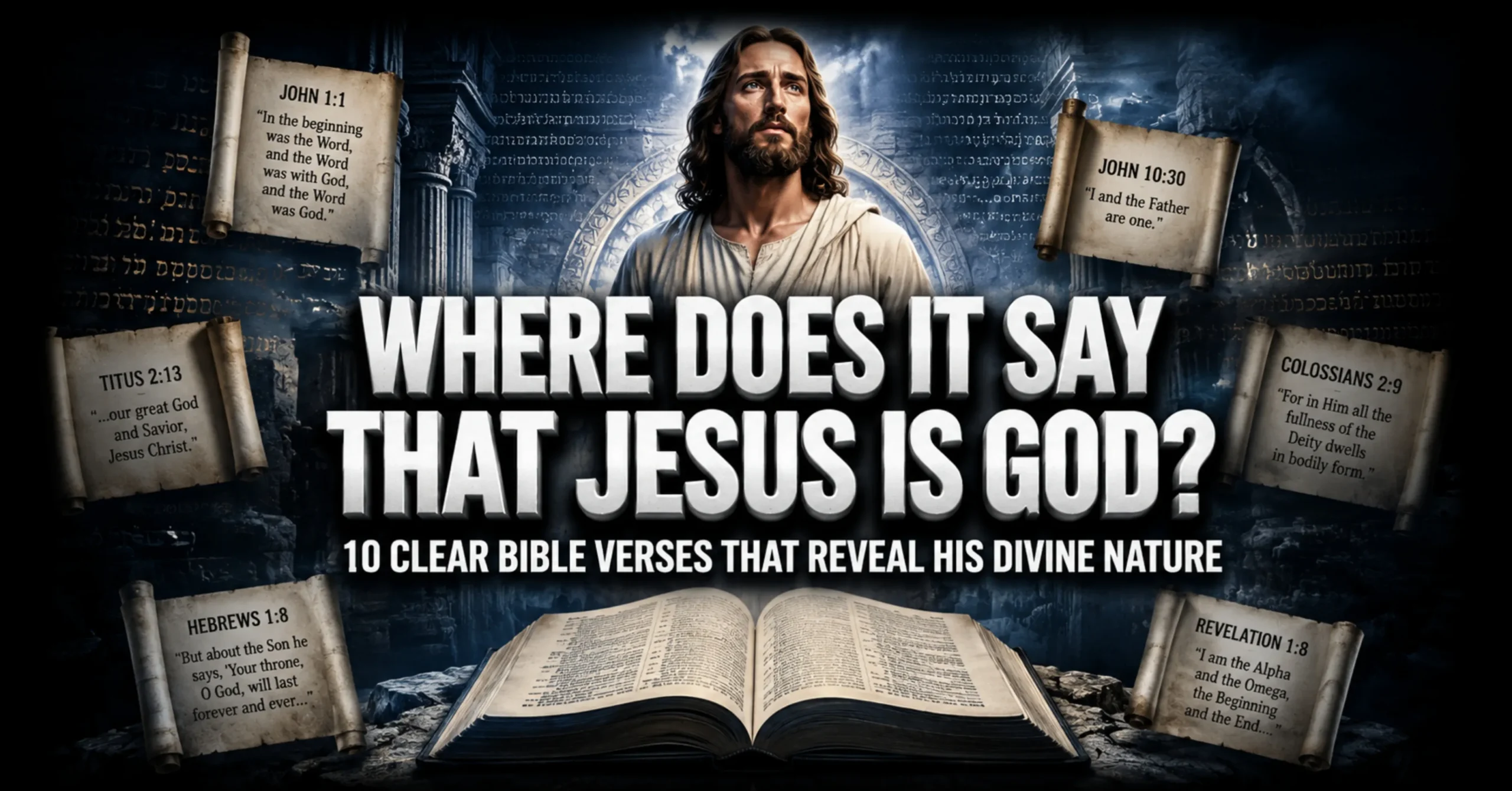
Many people ask, “Where does it say that Jesus is God in the Bible?” This question is important because the answer shapes how we understand Jesus, salvation, and the Christian faith itself. While Jesus did not always use the exact words “I am God,” the Bible repeatedly presents Him as fully divine through His words, actions, titles, and the testimony of His followers.
Over the years of studying Scripture and writing Bible-based content, I have noticed that many believers struggle with this topic because the evidence is found across several books of the Bible rather than in a single verse. The good news is that Scripture provides clear and consistent proof. In this article, we will examine key Bible passages that reveal Jesus’ divine nature and explain why Christians believe Jesus is truly God.
Where Does It Say That Jesus Is God in the Bible?
The Bible does not leave the identity of Jesus open to speculation. Several passages directly call Jesus God, while others describe Him with titles and attributes that belong only to God. Together, these verses form a consistent biblical foundation for the deity of Christ.
John 1:1 (NIV) — “The Word Was God”
John begins his Gospel with a powerful statement:
“In the beginning was the Word, and the Word was with God, and the Word was God.” (John 1:1, NIV)
Later in John 1:14, we learn that “the Word” became flesh and lived among us. This clearly identifies the Word as Jesus Christ. John presents Jesus as existing before creation and sharing the very nature of God.
This verse is one of the clearest answers to the question, “Where does it say that Jesus is God?”
John 20:28 (NIV) — Thomas Calls Jesus God
After Jesus rose from the dead, the apostle Thomas saw Him and responded:
“My Lord and my God!” (John 20:28, NIV)
This statement is significant because Jesus did not correct Thomas. Instead, He accepted Thomas’s confession of faith. In Jewish belief, calling someone “my God” would have been a serious matter. Thomas recognized that the risen Christ was more than a teacher or prophet.
Titus 2:13 (NIV) — Our Great God and Savior
Paul writes:
“While we wait for the blessed hope the appearing of the glory of our great God and Savior, Jesus Christ.” (Titus 2:13, NIV)
Here, Jesus is described as both Savior and God. This verse has long been recognized by Christian scholars as a direct affirmation of Christ’s deity.
Hebrews 1:8 (NIV) — The Father Calls the Son God
Hebrews records these words about the Son:
“But about the Son he says, ‘Your throne, O God, will last for ever and ever.’” (Hebrews 1:8, NIV)
This passage is remarkable because God the Father addresses the Son with the title “God.” It highlights the unique divine status of Jesus within Scripture.
1 John 5:20 (NIV) — The True God and Eternal Life
John concludes:
“He is the true God and eternal life.” (1 John 5:20, NIV)
John points believers to Jesus Christ as the source of eternal life and identifies Him with language that reflects true deity.
When these passages are read together, the biblical evidence becomes difficult to ignore. The New Testament writers consistently present Jesus as more than a prophet, messenger, or spiritual leader. They describe Him as God revealed in human flesh, worthy of faith, worship, and obedience.
Did Jesus Ever Say “I Am God, Worship Me”?
One of the most common objections is that Jesus never said the exact words, “I am God, worship me.” While that statement does not appear word-for-word in the Bible, Jesus made claims and accepted responses that His original audience understood as declarations of divine authority.
To understand this correctly, we must read Jesus’ words in their first-century Jewish context rather than through a modern lens.
Why Jesus Did Not Use Those Exact Words
Jesus often revealed His identity through titles, actions, and Old Testament references. His listeners understood these claims well enough that they sometimes accused Him of blasphemy.
Rather than making a simple slogan-like statement, Jesus demonstrated His divine identity through:
- Claiming eternal existence
- Forgiving sins
- Accepting worship
- Exercising authority that belongs to God alone
These actions communicated who He was in a way His audience clearly understood.
John 8:58 (NIV) — “Before Abraham Was Born, I Am”
Jesus declared:
“Very truly I tell you,” Jesus answered, “before Abraham was born, I am!” (John 8:58, NIV)
This statement echoes God’s self-revelation in Exodus 3:14, where God identifies Himself as “I AM.”
The reaction of the crowd is important. The next verse says they picked up stones to stone Him. They understood Jesus was making a claim far greater than simply being older than Abraham. He was identifying Himself with God’s eternal existence.
Matthew 14:33 (NIV) — Jesus Accepts Worship
After Jesus walked on water and calmed the storm, His disciples responded:
“Then those who were in the boat worshiped him, saying, ‘Truly you are the Son of God.’” (Matthew 14:33, NIV)
Throughout Scripture, worship belongs to God alone. Faithful servants of God refused worship when people attempted to give it to them. Jesus, however, accepted worship without correction.
This is one reason many Christians answer the question “Where did Jesus say, ‘I am God, worship me’?” by pointing not only to His words but also to His actions. Jesus consistently acted in ways that revealed His divine identity.
Taken together, passages like John 8:58 and Matthew 14:33 show that Jesus did not merely claim to speak for God. He spoke and acted with the authority of God Himself.
What Does John 10:30 Mean?
Among the most frequently searched passages in discussions about the deity of Christ is John 10:30. This verse is short, but its meaning is profound.
“I and the Father Are One”
Jesus said:
“I and the Father are one.” (John 10:30, NIV)
At first glance, some readers assume Jesus was speaking only about unity of purpose. However, the surrounding context shows that His audience understood something much deeper.
In John 10, Jesus describes Himself as the Good Shepherd who gives eternal life to His sheep. He then explains that no one can snatch His followers out of His hand or the Father’s hand. Immediately after this, He declares, “I and the Father are one.”
The statement points to a unique unity between the Father and the Son that goes beyond simple agreement.
Why the Religious Leaders Tried to Stone Jesus
The reaction of the Jewish leaders helps explain how they understood Jesus’ words.
John records:
“We are not stoning you for any good work,” they replied, “but for blasphemy, because you, a mere man, claim to be God.” (John 10:33, NIV)
Whether one agrees with their conclusion or not, the response shows that Jesus’ listeners understood His statement as a claim to divine status.
Why This Verse Matters
John 10:30 does not teach that Jesus and the Father are the same person. Instead, it reveals their unique unity within the Godhead.
For Christians, this verse is important because it supports the biblical teaching that:
- The Father and the Son are distinct persons.
- The Father and the Son share the same divine nature.
- Jesus possesses authority that belongs to God alone.
When read in context, John 10:30 becomes a powerful piece of evidence in understanding why Christians believe Jesus is fully God while remaining distinct from the Father.
Where in the Bible Does It Say Jesus and God Are One?
Many people wonder whether the Bible teaches that Jesus and God are one. The answer requires careful reading because Scripture presents both the unity of God and the distinction between the Father and the Son.
Several passages help explain this truth.
John 14:9 (NIV) — Seeing Jesus Reveals the Father
When Philip asked Jesus to show them the Father, Jesus replied:
“Anyone who has seen me has seen the Father.” (John 14:9, NIV)
Jesus was not saying that He is the Father. Instead, He was teaching that He perfectly reveals God’s character, nature, and glory. Everything the Father is, Jesus displays through His life and ministry.
This is why Jesus could speak with authority about God unlike any prophet before Him.
Colossians 2:9 (NIV) — The Fullness of Deity
Paul writes:
“For in Christ all the fullness of the Deity lives in bodily form.” (Colossians 2:9, NIV)
This verse is one of the strongest statements about Christ’s divine nature. Paul does not say that Jesus possesses part of God’s nature. He says the fullness of Deity dwells in Christ.
In other words, Jesus is fully God while also becoming fully human through the incarnation.
Are God and Jesus Christ the Same Person?
This question often creates confusion.
According to biblical teaching:
- There is one true God.
- The Father is God.
- The Son is God.
- The Holy Spirit is God.
- The Father, Son, and Holy Spirit are distinct persons.
This doctrine is commonly called the Trinity.
Therefore, Christians do not believe that Jesus and the Father are the same person. Rather, they believe Jesus shares the same divine nature as the Father while remaining personally distinct.
These passages help answer the question, “Where in the Bible does it say Jesus and God are one?” The Bible consistently presents Jesus as fully divine and perfectly united with the Father.
What About Verses Some People Use to Say Jesus Is Not God?
Some readers point to certain Bible verses and argue that Jesus cannot be God. These passages deserve careful attention because understanding their context helps prevent confusion.
Rather than ignoring difficult verses, Christians should examine them alongside the entire witness of Scripture.
John 14:28 (NIV) — “The Father Is Greater Than I”
Jesus said:
“The Father is greater than I.” (John 14:28, NIV)
At first glance, this verse may seem to deny Christ’s deity. However, the context is important.
During His earthly ministry, Jesus willingly humbled Himself and took on the role of a servant. Philippians 2:6–8 explains that although He existed in the form of God, He humbled Himself by becoming human.
Jesus is speaking about His position during His earthly mission, not denying His divine nature.
John 17:3 (NIV) — “The Only True God”
Jesus prayed:
“Now this is eternal life: that they know you, the only true God, and Jesus Christ, whom you have sent.” (John 17:3, NIV)
Some use this verse to argue that only the Father is God.
However, in the same Gospel, John clearly identifies Jesus as God (John 1:1) and records Thomas calling Him “My Lord and my God” (John 20:28).
John 17:3 highlights the relationship between the Father and the Son, not a denial of Christ’s deity.
Understanding Jesus’ Humanity and Divinity
The New Testament teaches two truths simultaneously:
- Jesus is fully God.
- Jesus is fully human.
Because Jesus became human, He experienced hunger, fatigue, sorrow, and other realities of human life. Yet the same Scriptures also attribute divine titles, authority, and worship to Him.
When difficult passages are read alongside clear statements such as John 1:1, Hebrews 1:8, and Titus 2:13, the overall biblical picture remains consistent.
The Bible presents Jesus not as merely a prophet or teacher, but as God the Son who entered history to accomplish salvation for humanity.
FAQ
Where does the Bible clearly say Jesus is God?
John 1:1, John 20:28, Hebrews 1:8, and Titus 2:13 directly identify Jesus as God.
What verse says Jesus is fully God?
Colossians 2:9 clearly says the fullness of Deity lives in Christ.
Did Jesus ever say “I am God, worship me”?
No exact words, but He made divine claims and accepted worship.
What does John 10:30 mean?
It shows Jesus and the Father are one in nature and unity
Is Jesus God according to the KJV Bible?
Yes, KJV verses like John 1:1 and John 20:28 affirm His deity.
Does Revelation call Jesus God?
Yes, Revelation uses divine titles like Alpha and Omega for Jesus.
Are Jesus and God the same person?
No, they are distinct persons but one God in nature (Trinity).
Where in the Bible does it say Jesus and God are one?
John 10:30, John 14:9, and Colossians 2:9 show their unity.
Conclusion
So, where does it say that Jesus is God? The answer is found throughout the New Testament. From John 1:1 and John 20:28 to Hebrews 1:8 and Colossians 2:9, Scripture consistently presents Jesus as fully divine.
Just as important, Jesus spoke, acted, and received honor in ways that belong to God alone. He forgave sins, accepted worship, claimed eternal existence, and revealed the Father perfectly.
As someone who has spent years studying biblical theology and writing faith-based content, I have found that the strongest approach is to read all of these passages together rather than relying on a single verse. When viewed as a whole, the biblical evidence forms a clear and consistent picture.
The question is not simply whether one verse calls Jesus God. The deeper reality is that the entire New Testament points to Jesus Christ as God revealed in human flesh the Savior who came to bring forgiveness, redemption, and eternal life to all who trust in Him.

Juganta Kumbhar is a Christian pastor, blogger, and content creator who serves in ministry and a local church. He holds a postgraduate degree and has spent significant time writing and publishing Christian and Bible-related content across multiple websites. He also volunteers in social work, believing a life poured out for others is never wasted. He created ChristianPrayerLife to share the life of Christ honestly and warmly the way one friend talks to another hoping every reader who visits feels a little less alone and a little closer to God.