
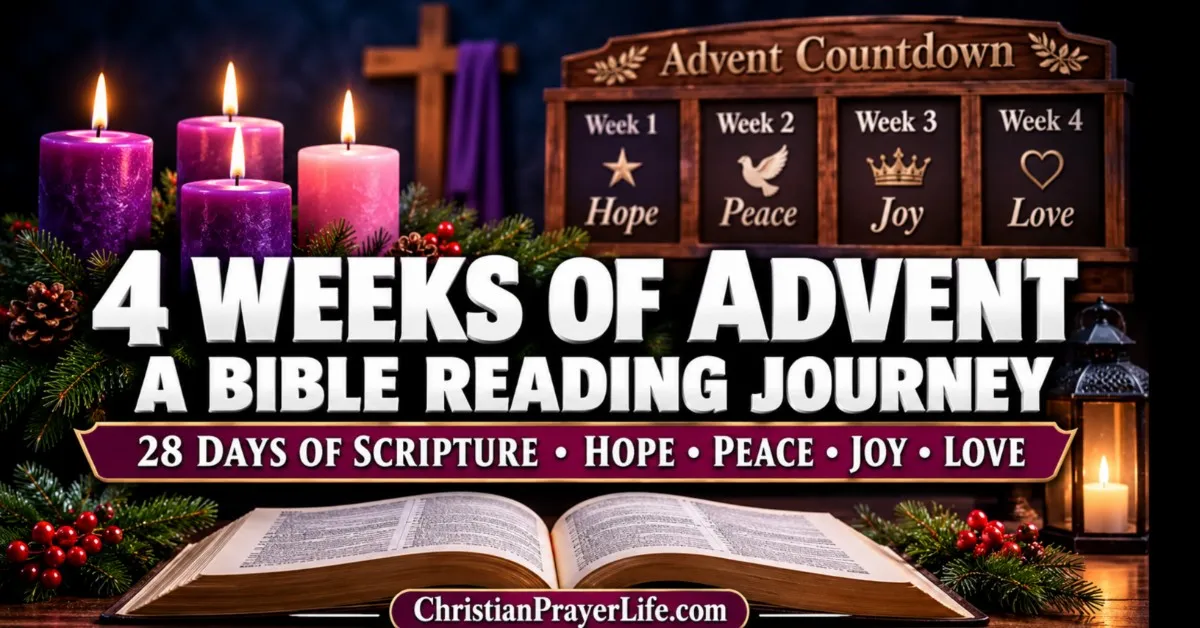
Advent is a season when Christians remember God’s promises and prepare to celebrate the birth of Jesus. If you want to spend more time in Scripture before Christmas, this Advent Bible reading plan offers a simple four-week schedule for daily reading.
The plan includes 28 Scripture readings organized around four themes: hope, peace, joy, and love. Each reading has a short explanation and a reflection question to help you think about the passage. You can follow the plan on your own, read with your family, or use it with a small Bible study group.
Whether Advent is new to you or part of your yearly routine, these readings will help you explore the biblical story of the promised Messiah and reflect on the meaning of Jesus’ birth.
If you are new to Advent, you can first read our guide to what Advent means and why Christians celebrate it before beginning this Bible reading plan.
How to Use This Advent Bible Reading Plan
You do not need a complicated routine to follow this Bible reading plan for Advent. Set aside a little time each day and use these steps at a pace that works for you.
- Choose a regular time: Read in the morning, during a lunch break, or in the evening. A regular time can help you build a daily habit.
- Read the full passage: Use a Bible translation you understand. Read the assigned verses before looking at the explanation.
- Consider the explanation: Notice the passage’s main message and its biblical context.
- Answer the reflection question: Think about what the reading helps you understand about God, His promises, or the coming of Jesus.
- Write down what stands out: Record a verse, an important insight, or a question you want to explore further.
- Continue if you miss a day: You do not need to start over or feel discouraged. Simply pick up with the next reading when you are ready.
This is a flexible devotional plan, not an official church lectionary. Hope, peace, joy, and love are common Advent themes, but Christian traditions do not all follow the same readings or weekly order. These four themes offer one way to reflect on Scripture during the season.
The schedule is undated because Advent begins on a different date each year, and the period from its first Sunday to Christmas Eve is not always 28 days. You can read one passage a day, combine readings to finish before Christmas, or continue after Christmas Day.
If you would also like to include prayer in your daily Advent routine, explore these Advent prayers for each week.
Week 1 – Advent Bible Readings About Hope
Weekly theme: God’s promises and the hope of the coming Messiah.
The hope of the Advent story begins long before Jesus’ birth. After Adam and Eve disobey God, Genesis records a promise that Christians have traditionally read in light of Christ’s victory over sin and evil. Later, the prophets speak of a coming ruler and a time of restoration. This first week of the Advent Bible reading plan follows these promises through the announcement of Jesus’ birth. As you read, notice how God’s faithfulness connects these passages.
| Day | Bible passage | Main reading focus |
|---|---|---|
| Day 1 | Genesis 3:8–15 | God’s promise after humanity’s fall |
| Day 2 | Isaiah 7:10–14 | The sign of Immanuel |
| Day 3 | Isaiah 9:1–7 | The promised child and coming King |
| Day 4 | Micah 5:2–5 | The promised ruler from Bethlehem |
| Day 5 | Psalm 130:1–8 | Waiting for the Lord with hope |
| Day 6 | Luke 1:5–25 | Zechariah receives the promise of a son |
| Day 7 | Luke 1:26–38 | The announcement of Jesus’ birth |
Day 1: God’s Promise After the Fall
Read: Genesis 3:8–15
What this passage teaches: After Adam and Eve disobey God, they hide from Him and face the consequences of their sin. God also speaks of ongoing conflict between the serpent and the woman’s offspring. Christians have traditionally read Genesis 3:15 as an early promise pointing to Christ’s victory over sin and evil.
Reflect: What does God’s response to Adam and Eve show you about His character when He confronts sin?
Day 2: The Sign of Immanuel
Read: Isaiah 7:10–14
What this passage teaches: King Ahaz faces a military threat from neighboring kingdoms. God invites him to ask for a sign, but Ahaz refuses. Isaiah then announces the sign of a child called Immanuel. The prophecy addresses the crisis in Ahaz’s day, and Matthew 1:22–23 applies it to Jesus as its fulfillment.
Reflect: How does knowing the historical setting help you understand Matthew’s use of this prophecy?
Day 3: The Child Who Will Reign
Read: Isaiah 9:1–7
What this passage teaches: Isaiah speaks of people living in darkness and oppression and promises that light and joy will come. He then describes a child who will reign on David’s throne with justice and righteousness. Christians understand this promise of a lasting kingdom as fulfilled in Jesus, the Messiah.
Reflect: What does Isaiah’s description of this coming King help you understand about Jesus’ reign?
Day 4: A Ruler from Bethlehem
Read: Micah 5:2–5
What this passage teaches: Micah points to Bethlehem Ephrathah, a small place among the clans of Judah, as the origin of a coming ruler. This ruler will shepherd God’s people in the Lord’s strength and bring security. Matthew 2:5–6 connects Micah’s prophecy with the Messiah and the birth of Jesus.
Reflect: What might the promise of a ruler from Bethlehem teach you about the way God works through places the world may overlook?
Day 5: Waiting for the Lord
Read: Psalm 130:1–8
What this passage teaches: The psalmist cries out to God in deep need. He recognizes that no one could stand before God if He kept a record of every sin, yet forgiveness is found with the Lord. The psalm compares waiting for God to a watchman waiting for morning and calls Israel to hope in His steadfast love.
Reflect: What are you waiting for God to do, and how might this psalm shape the way you wait?
Day 6: Zechariah Receives a Promise
Read: Luke 1:5–25
What this passage teaches: Zechariah and Elizabeth are faithful to God, but they have no child and are advanced in age. While serving in the temple, Zechariah hears from Gabriel that Elizabeth will have a son, John, who will prepare people for the Lord. Because Zechariah does not believe the announcement, he becomes unable to speak until after John is born and named.
Reflect: How do you respond when something God has promised seems difficult to believe in light of your circumstances?
Day 7: Gabriel Announces Jesus’ Birth
Read: Luke 1:26–38
What this passage teaches: Gabriel visits Mary in Nazareth and tells her that she will give birth to Jesus, who will be called the Son of the Most High and receive David’s throne. Mary asks how this can happen, and Gabriel explains that the Holy Spirit will come upon her. Mary responds by accepting the Lord’s will.
Reflect: What can Mary’s response teach you about trusting God when you cannot see how everything will unfold?
Weekly reflection: This week’s readings trace the hope of a coming Savior from the story of humanity’s fall through the promises spoken by the prophets and the announcements made to Zechariah and Mary. Which passage most strengthens your trust in God’s faithfulness, especially when you are waiting for something He has promised?
Week 2 – Advent Bible Readings About Peace
Weekly theme: God’s peace, His faithfulness, and the events surrounding the coming of Jesus.
Biblical peace is more than a quiet life or the absence of problems. It begins with a restored relationship with God through faith in Jesus Christ and includes the confidence of trusting Him through difficult circumstances. This week’s Advent Bible readings explore God’s comfort, the peace He gives His people, and the events surrounding Jesus’ birth. Along the way, you will read about Mary’s visit to Elizabeth, Joseph’s response to the angel, and Jesus’ promise of peace to His disciples.
| Day | Bible passage | Main reading focus |
|---|---|---|
| Day 8 | Isaiah 26:1–4 | Trusting God as the source of lasting peace |
| Day 9 | Isaiah 40:1–11 | God’s comfort and faithful care |
| Day 10 | Luke 1:39–45 | Mary visits Elizabeth |
| Day 11 | Luke 1:46–56 | Mary’s song of praise |
| Day 12 | Matthew 1:18–25 | Joseph learns about Jesus’ birth |
| Day 13 | Romans 5:1–5 | Peace with God through Jesus Christ |
| Day 14 | John 14:25–27 | The peace Jesus gives His followers |
Day 8: Trusting God as Our Rock
Read: Isaiah 26:1–4
What this passage teaches: Isaiah describes a song celebrating the security God provides for His people. He speaks of deep peace for those who keep their minds focused on the Lord and trust Him. Their confidence does not depend on changing circumstances but rests on God, the everlasting Rock.
Reflect: What tends to pull your attention away from God, and what could help you turn your thoughts back to His faithfulness?
Day 9: Comfort for God’s People
Read: Isaiah 40:1–11
What this passage teaches: Isaiah brings words of comfort to God’s people and announces that the Lord is coming. A voice calls for the way of the Lord to be prepared. Human life fades like grass, but God’s word stands forever. The passage closes with a picture of God caring for His people like a shepherd who gathers lambs and carries them close.
Reflect: Where in your life do you need the comfort and care of the Shepherd described in this passage?
Day 10: Mary Visits Elizabeth
Read: Luke 1:39–45
What this passage teaches: Mary visits her relative Elizabeth in the hill country of Judea. When Elizabeth hears Mary’s greeting, the baby in her womb leaps, and she is filled with the Holy Spirit. She blesses Mary and recognizes the significance of the child she will bear. Elizabeth also calls Mary blessed because she believed that the Lord would fulfill His word to her.
Reflect: Who has encouraged your faith during an uncertain time, and how could you offer similar encouragement to someone else?
Day 11: Mary’s Song of Praise
Read: Luke 1:46–56
What this passage teaches: Mary responds with a song of praise often called the Magnificat. She celebrates God’s mercy, His mighty works, and His care for the humble and hungry. She also remembers His faithfulness to Abraham and his descendants. Her words show that the coming of Jesus is connected to God’s long history of keeping His promises.
Reflect: What does Mary’s song reveal about God’s concern for the humble, the hungry, and those who depend on Him?
Day 12: Joseph’s Faithful Response
Read: Matthew 1:18–25
What this passage teaches: Matthew describes the events surrounding Jesus’ birth from Joseph’s perspective. When he learns that Mary is pregnant, Joseph plans to end their engagement quietly. An angel appears to him in a dream, telling him not to be afraid to take Mary as his wife. The angel explains that the child will save His people from their sins. Joseph obeys the instruction he receives.
Reflect: How might Joseph’s response encourage you when following God requires you to change your plans?
Day 13: Peace with God Through Christ
Read: Romans 5:1–5
What this passage teaches: Paul explains that those who are made right with God through faith have peace with Him through Jesus Christ. This peace describes a restored relationship with God, not a promise of a trouble-free life. Paul also explains how suffering can produce endurance, character, and hope because God’s love has been poured into believers’ hearts through the Holy Spirit.
Reflect: How does knowing that you have peace with God through Christ change the way you view difficult circumstances?
Day 14: The Peace Jesus Gives
Read: John 14:25–27
What this passage teaches: Jesus speaks to His disciples as He prepares them for His departure. He promises that the Holy Spirit will teach them and remind them of His words. He also gives them His peace, which is different from what the world offers. His promise does not mean they will avoid hardship; it gives them a reason not to let fear rule their hearts.
Reflect: What fear or concern do you need to bring before Jesus as you reflect on the peace He gives His followers?
Weekly reflection: This week’s readings show that biblical peace is rooted in God’s character and the relationship with Him made possible through Jesus Christ. It does not depend on having perfect circumstances. Which passage helped you understand this peace more deeply, and how could that truth shape your response to a challenge you are facing?
Week 3 – Advent Bible Readings About Joy
Weekly theme: The good news of Jesus Christ and the joy of God’s salvation.
In Luke’s Gospel, the birth of Jesus is announced as good news of great joy for all people. The other readings help us understand why God’s salvation gives His people reason to rejoice. Biblical joy does not mean ignoring grief, hardship, or disappointment. Scripture makes room for honest sorrow while reminding us that our hope rests in God’s character and faithfulness.
| Day | Bible passage | Main reading focus |
|---|---|---|
| Day 15 | Luke 2:1–7 | Jesus is born in Bethlehem |
| Day 16 | Luke 2:8–20 | The shepherds hear the good news |
| Day 17 | Psalm 96:1–13 | A call to rejoice in the Lord |
| Day 18 | Zephaniah 3:14–17 | God’s presence among His people |
| Day 19 | Isaiah 12:1–6 | Giving thanks for God’s salvation |
| Day 20 | Philippians 4:4–7 | Rejoicing and trusting God |
| Day 21 | Habakkuk 3:17–19 | Finding joy in God during difficult times |
Day 15: Jesus Is Born in Bethlehem
Read: Luke 2:1–7
What this passage teaches: Luke places Jesus’ birth during the reign of Caesar Augustus and describes Joseph traveling from Nazareth to Bethlehem with Mary, who was expecting a child. There, Mary gives birth to Jesus and lays Him in a manger because there is no room for them in the guest room. The promised Savior enters the world in humble circumstances.
Reflect: What does the humble setting of Jesus’ birth reveal about the way God chose to enter human history?
Day 16: Good News for the Shepherds
Read: Luke 2:8–20
What this passage teaches: An angel appears to shepherds watching their flocks and announces good news of great joy: a Savior, Christ the Lord, has been born in David’s town. The shepherds go to Bethlehem, find the child, and tell others what they have heard. Mary, meanwhile, treasures these events and reflects on them.
Reflect: The shepherds shared what they had heard and seen. What could sharing the good news of Jesus look like in your daily life?
Day 17: Sing a New Song to the Lord
Read: Psalm 96:1–13
What this passage teaches: Psalm 96 calls God’s people to sing a new song and declare His glory among the nations. It contrasts the living Lord with lifeless idols and invites all creation to rejoice before Him. The psalm also looks forward to God’s righteous judgment, reminding readers that His rule is just and worthy of praise.
Reflect: How does knowing that God rules with righteousness shape the way you worship Him?
Day 18: The Lord Is Among His People
Read: Zephaniah 3:14–17
What this passage teaches: After earlier warnings of judgment, Zephaniah calls God’s people to rejoice because the Lord is among them. He has removed their judgment and promises to deal with their enemies. The passage also describes God rejoicing over His people. Their joy rests on His presence and saving work, not on their own strength.
Reflect: How does the promise of God’s presence encourage you when you feel uncertain or discouraged?
Day 19: Give Thanks for God’s Salvation
Read: Isaiah 12:1–6
What this passage teaches: Isaiah 12 is a song of thanksgiving for God’s salvation. The speaker acknowledges that God has become his strength and song and has brought comfort. The picture of drawing water from the wells of salvation expresses the joy of receiving what God provides. The song ends by calling God’s people to make His deeds known among the nations.
Reflect: What truth about God’s salvation are you especially thankful for, and how could you share it with someone?
Day 20: Rejoice and Bring Your Worries to God
Read: Philippians 4:4–7
What this passage teaches: Paul encourages believers to rejoice in the Lord and bring their worries to God through prayer and thanksgiving. Writing to the Philippians while facing imprisonment, he does not speak from a life free of hardship. Instead, he points them toward God’s peace, which guards their hearts and minds in Christ Jesus.
Reflect: What worry can you honestly bring to God today, and what can you thank Him for even while that concern remains?
Day 21: Joy When Circumstances Are Hard
Read: Habakkuk 3:17–19
What this passage teaches: Habakkuk describes a time when crops fail and livestock are gone. He does not pretend these losses are unimportant. Even so, he declares that he will rejoice in the Lord and find his strength in God. His words show that biblical joy can exist alongside painful circumstances because it is rooted in God Himself.
Reflect: When life does not turn out as you hoped, what helps you continue looking to God for strength?
Weekly reflection: The shepherds hear that Jesus’ birth is good news of great joy, while Habakkuk shows that joy in God can remain even in seasons of loss. Together, these passages help us see that biblical joy is deeper than temporary happiness. What gives you reason to rejoice in God, even when life is difficult?
Week 4 – Advent Bible Readings About Love
Weekly theme: God’s love revealed through Jesus Christ.
The final week focuses on what the coming of Jesus reveals about God’s love. John describes the Word becoming flesh, while Paul explains the redemption and adoption believers receive through Christ. Other New Testament passages show how God’s love should shape the lives of His people. Together, these readings look beyond the manger to Jesus’ humility, saving work, and authority over all creation.
| Day | Bible passage | Main reading focus |
|---|---|---|
| Day 22 | John 1:1–14 | The Word became flesh |
| Day 23 | Galatians 4:4–7 | God sent His Son at the appointed time |
| Day 24 | 1 John 4:7–12 | God’s love revealed through His Son |
| Day 25 | Romans 8:31–39 | Nothing can separate believers from God’s love |
| Day 26 | Philippians 2:5–11 | The humility and exaltation of Christ |
| Day 27 | Colossians 1:15–20 | The supremacy of Jesus Christ |
| Day 28 | Titus 3:3–7 | God’s kindness, mercy, and grace |
Day 22: The Word Became Flesh
Read: John 1:1–14
What this passage teaches: John begins by describing the Word as existing in the beginning, being with God, and being God. All things came into being through Him. John then declares that the Word became flesh and lived among us. This reveals that Jesus is the eternal Word who came into the world, not merely a messenger sent by God.
Reflect: How does understanding who Jesus is deepen the meaning of His birth for you?
Day 23: Adopted as God’s Children
Read: Galatians 4:4–7
What this passage teaches: Paul explains that, at the appointed time, God sent His Son, born of a woman and under the law, to redeem those under the law. Through Christ, believers receive adoption as God’s children. God sends the Spirit of His Son into their hearts, enabling them to call Him Father. They are no longer slaves but heirs.
Reflect: How should knowing that you are welcomed as God’s child shape the way you approach Him?
Day 24: Love Begins with God
Read: 1 John 4:7–12
What this passage teaches: John teaches that love comes from God and that His love was revealed by sending His Son into the world so that we might have life through Him. Love did not begin with our efforts to reach God; He loved us first. Those who have received His love are called to show that same love to one another.
Reflect: Is there a relationship in which you need to show more patience, kindness, or care because of the love God has shown you?
Day 25: Nothing Can Separate Us from God’s Love
Read: Romans 8:31–39
What this passage teaches: Paul points to God’s gift of His Son as the foundation of believers’ confidence. He names hardship, persecution, danger, and even death, yet declares that none can separate God’s people from His love in Christ. This does not mean suffering will never come. It means that no hardship can separate believers from God’s love.
Reflect: Which difficulty mentioned in this passage feels most familiar to you, and how does Paul’s assurance speak into it?
Day 26: The Humility of Christ
Read: Philippians 2:5–11
What this passage teaches: Paul calls believers to follow the humble mindset of Christ. Though Jesus existed in the form of God, He took the form of a servant and humbled Himself through obedience, even to death on a cross. God then exalted Him. Jesus’ humility was not a loss of His divine identity but a willing act of self-giving love.
Reflect: Where could you put another person’s needs ahead of your own desire for recognition or comfort?
Day 27: Christ Is Above All
Read: Colossians 1:15–20
What this passage teaches: Paul describes Jesus as the image of the invisible God and the one through whom all things were created. Christ is before all things, holds all things together, and is the head of the church. Through His death on the cross, God brings reconciliation. The child born in Bethlehem is Lord over all creation.
Reflect: How does recognizing Jesus as Lord over all creation change the way you understand the significance of His coming?
Day 28: Saved by God’s Mercy
Read: Titus 3:3–7
What this passage teaches: Paul reminds believers that they once lived in disobedience and were far from God. But God’s kindness and love appeared, and He saved them through His mercy, not because of their good works. This salvation comes through the renewing work of the Holy Spirit and the grace of Jesus Christ, giving believers the hope of eternal life.
Reflect: How does remembering that salvation comes through God’s mercy rather than your own achievements shape your gratitude toward Him?
Weekly reflection: These readings reveal God’s love through the person and work of Jesus Christ. His coming, humility, death, and saving grace show a love that acts rather than remaining only a feeling. How can receiving this love shape the way you treat your family, friends, neighbors, and even people you find difficult to love?
For further study, explore these Bible verses about faith, hope, and love and what these qualities mean in the Christian life.
Christmas Day Bible Reading – Reflecting on the Birth of Jesus
After completing the four weekly sections, you may want to revisit a few passages that help you reflect on the birth and significance of Jesus. These three readings offer complementary perspectives on the Christmas story and the meaning of Christ’s coming.
| Bible passage | Reading focus |
|---|---|
| Luke 2:1–20 | The birth of Jesus and the shepherds |
| Matthew 2:1–12 | The visit of the wise men |
| John 1:14 | The Word became flesh |
Luke records Jesus’ birth in Bethlehem and the shepherds’ visit after hearing the angel’s announcement. Matthew tells of wise men who come from the East to worship the newborn King. The passage does not say how many wise men there were. John 1:14 gives a broader understanding of Christmas by declaring that the eternal Word became flesh and lived among us. Together, these passages help you reflect on both the events of Jesus’ birth and who He is.
More Bible Verses to Read During Advent
If you would like to continue beyond the 28-day schedule, these additional Advent Bible verses offer more opportunities to explore the purpose of Jesus’ coming, God’s promises, and the hope of His return.
| Bible verse | What it teaches |
|---|---|
| Matthew 1:21 | The angel explains that Jesus will save His people from their sins. |
| Luke 1:37 | Gabriel reminds Mary that nothing is impossible with God. |
| Luke 2:11 | The angel announces the birth of the Savior, Christ the Lord. |
| John 1:14 | The eternal Word became flesh and lived among us. |
| Romans 15:13 | Paul speaks of God filling believers with joy and peace as they trust Him, so they may abound in hope through the Holy Spirit. |
| 1 Timothy 1:15 | Paul declares that Christ Jesus came into the world to save sinners. |
| Hebrews 1:1–3 | God has spoken through His Son, who reveals His glory and sustains all things. |
| Revelation 22:20 | Jesus promises that He is coming soon, pointing believers toward His return. |
You can read these passages after completing the main schedule or choose one whenever you want to study a particular part of the Advent story more closely.
Christmas Day Bible Reading – Reflecting on the Birth of Jesus
After completing the four weekly sections, you may want to spend additional time reading the biblical accounts connected with Christmas. These three passages offer different perspectives on Jesus’ birth and the meaning of His coming.
| Bible passage | Reading focus |
|---|---|
| Luke 2:1–20 | The birth of Jesus and the shepherds |
| Matthew 2:1–12 | The visit of the wise men |
| John 1:14 | The Word became flesh |
Luke tells of Jesus’ birth in Bethlehem and the shepherds who visit Him after hearing the angel’s announcement. Matthew describes wise men from the East who follow a star and come to worship Jesus. They find Him in a house, and the passage does not specify how many wise men there were. John 1:14 offers a broader view of the incarnation, declaring that the eternal Word became flesh and lived among us. Together, these readings help you reflect on the events of Jesus’ early life and the deeper meaning of His coming.
More Bible Verses to Read During Advent
If you would like to continue reading beyond the 28-day schedule, these additional Advent Bible verses offer more ways to explore the purpose of Jesus’ coming, God’s promises, and the hope of His return.
| Bible verse | What it teaches |
|---|---|
| Matthew 1:21 | The angel explains that Jesus will save His people from their sins. |
| Luke 1:37 | Gabriel reminds Mary that nothing is impossible with God. |
| Romans 15:13 | Paul speaks of God filling believers with joy and peace as they trust Him, so they may abound in hope through the Holy Spirit. |
| 1 Timothy 1:15 | Paul states that Christ Jesus came into the world to save sinners. |
| Hebrews 1:1–3 | God has spoken through His Son, who reveals His glory and sustains all things. |
| Revelation 22:20 | Jesus promises that He is coming soon, pointing believers toward His return. |
You can read these passages after completing the main schedule or choose one whenever you want to study a particular part of the Advent story more closely.
Frequently Asked Questions About the Advent Bible Reading Plan
What is a good Bible reading plan for Advent?
A helpful Advent Bible reading plan includes passages about God’s promises, the coming Messiah, Jesus’ birth, and the meaning of His saving work. Daily explanations and reflection questions can also help you understand each passage and think more deeply about its message.
What Bible verses should I read during Advent?
You can begin with Isaiah 7:10–14, Isaiah 9:1–7, Micah 5:2–5, and Psalm 130:1–8. Luke 1 and 2, Matthew 1 and 2, and John 1:1–14 also offer important passages about the announcement, birth, and identity of Jesus.
How do you read the Bible during the four weeks of Advent?
Follow the four weekly sections in order and read one assigned passage each day. After reading, consider the explanation and spend a few moments answering the reflection question. You can also write down a verse or thought that stands out to you.
What are the four themes of Advent?
Hope, peace, joy, and love are common devotional themes used to organize Advent readings and reflections. They are not a universal biblical sequence required by every Christian tradition. Churches and lectionary systems may use different readings and emphases.
Can I follow this Advent Bible reading plan on my own?
Yes. You can follow the plan individually, with your family, or in a small Bible study group. If you read with others, take turns sharing what stood out from each passage and discussing the reflection question. No special materials or group are required.
When should I start an Advent Bible reading plan?
Advent begins on the fourth Sunday before Christmas. Since its dates change each year, this undated 28-reading schedule can be adapted to your calendar. Start at the beginning of Advent, combine readings when needed, or continue after Christmas.
What should I read in the Bible on Christmas Day?
Luke 2:1–20 tells of Jesus’ birth and the shepherds who visit Him. Matthew 2:1–12 describes the wise men coming to worship Jesus, while John 1:14 explains the incarnation. Reading these passages together offers different perspectives on the coming of Christ.
Conclusion
This four-week Advent Bible reading plan takes you through God’s promises, the peace He offers through Christ, the joy of His salvation, and the love revealed through Jesus. Its 28 Scripture readings provide a practical way to spend time in God’s Word and reflect on the meaning of Christmas.
Read at a pace that works for you, whether on your own or with others. And when Christmas has passed, keep exploring Scripture. The story of Jesus does not end at the manger; His life, death, and resurrection continue to reveal God’s grace and love.

Juganta Kumbhar is a Christian pastor, blogger, and content creator who serves in ministry and a local church. He holds a postgraduate degree and has spent significant time writing and publishing Christian and Bible-related content across multiple websites. He also volunteers in social work, believing a life poured out for others is never wasted. He created ChristianPrayerLife to share the life of Christ honestly and warmly the way one friend talks to another hoping every reader who visits feels a little less alone and a little closer to God.