
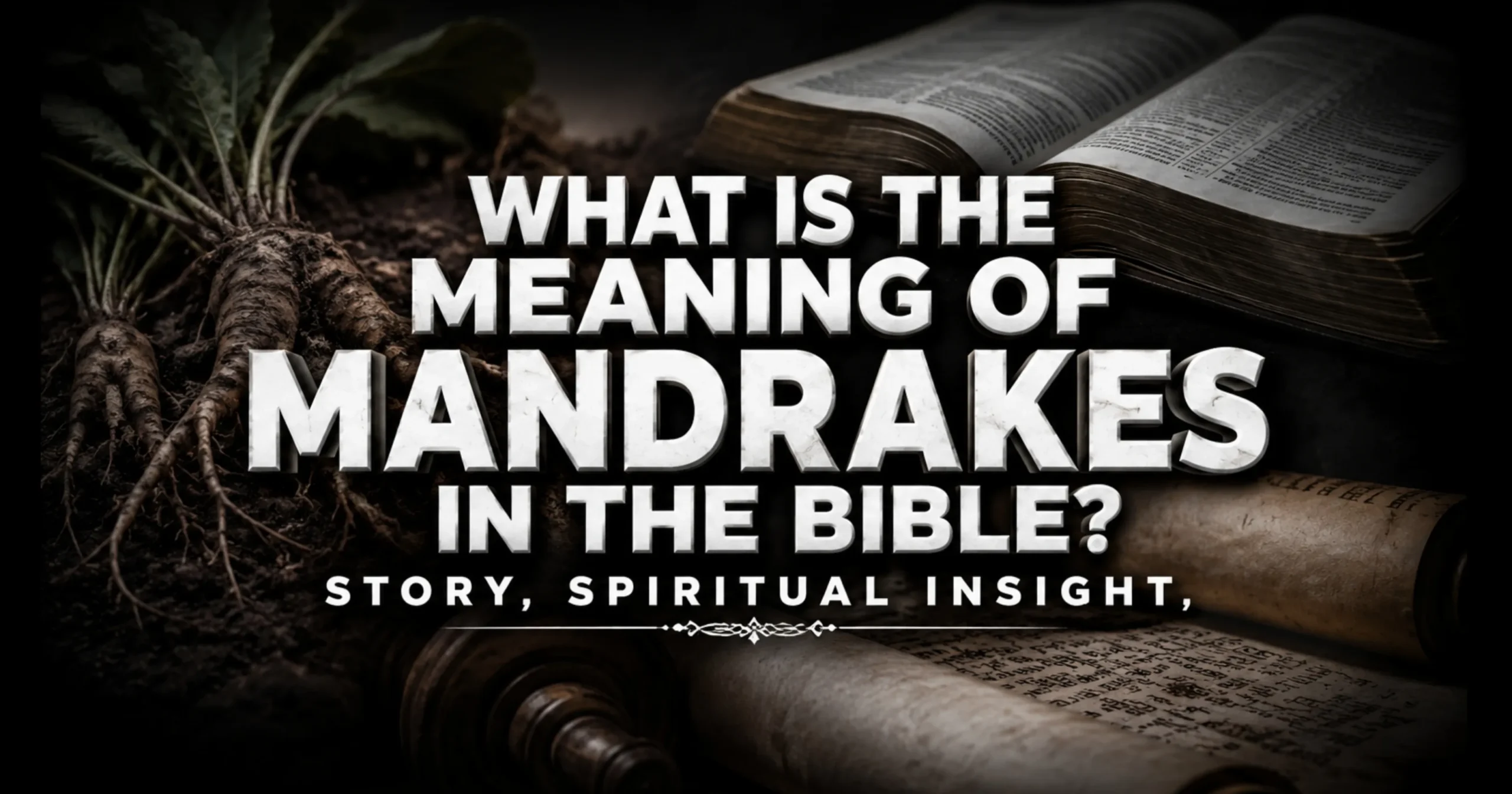
The phrase “mandrakes in the Bible” appears in two powerful and very different passages Genesis 30 and Song of Solomon 7:13. For many readers, these references feel mysterious. A simple plant suddenly becomes part of deep emotional stories involving longing, love, and unanswered prayers.
Mandrakes are not just ancient botanical mentions. In Scripture, they sit quietly inside human stories of desire especially the desire for children, affection, and fulfillment. That’s why people today still ask: What are mandrakes in the Bible, and why were they so important?
In this article, we’ll walk through their meaning in simple words, the story behind Rachel and Leah, and what these verses may quietly teach us about God, timing, and human longing.
What Are Mandrakes in the Bible?
Mandrakes in the Bible refer to a real plant mentioned in Genesis 30 and Song of Solomon 7:13. It is believed to be a small flowering plant with a thick, often forked root, historically found in the Mediterranean region.
But in Scripture, mandrakes are not treated as scientific objects. They appear within stories stories filled with emotion, struggle, and deep human desire.
When people ask what are mandrakes in the Bible, they are usually not just asking about a plant. They are trying to understand why this plant became part of a deeply personal moment between two sisters in Scripture.
Biblical Understanding of Mandrakes
The Bible does not define mandrakes in a technical or scientific way. Instead, it simply places them into a narrative.
In Genesis 30, Reuben finds mandrakes in the field and brings them to his mother Leah. This small act becomes part of a larger story involving Rachel, Leah, and Jacob three lives shaped by longing, comparison, and the pain of waiting.
Mandrakes here are not described as magical or powerful. They simply reflect what people at that time believed about nature and fertility.
Mandrake Plant in Ancient Times
Outside the Bible, mandrakes were widely known in the ancient world. People often associated them with fertility, love, and even mystery. One reason is their unusual root, which sometimes resembles a human figure.
Because of this appearance, many ancient cultures surrounded the plant with stories and beliefs. Some thought it carried special properties, especially related to childbirth and desire.
However, Scripture itself never confirms these ideas. Instead, it simply shows us how people of that time thought and lived within their cultural understanding.
What Do Mandrakes Mean in the Bible?
Mandrakes do not carry a fixed theological definition in the Bible. Their meaning comes from the moments they appear in not from a doctrine or command.
Across both biblical passages, mandrakes are quietly tied to deep human emotions:
- longing for children
- desire for love and acceptance
- hope in seasons of waiting
So when people ask what do mandrakes mean in the Bible, the answer is less about a plant and more about the human heart behind the story.
The Story of Rachel, Leah, and Mandrakes (Genesis 30)
The most well-known mention of mandrakes comes from the emotional story of Rachel and Leah.
In Genesis 30, Leah’s son Reuben finds mandrakes in the field and brings them home. Rachel, who is deeply struggling with infertility, asks Leah for them. In response, Leah agrees but only if Rachel allows her to spend time with Jacob that night.
At first glance, it feels like a simple exchange. But beneath it lies something heavier: two women carrying pain, insecurity, and the longing to be seen and blessed.
Mandrakes become part of that tension not because they have power, but because people believed they did.
And yet, as the story unfolds, Scripture gently reminds us that life is not controlled by objects or human effort, but by God’s timing and grace.
Mandrakes in Song of Solomon 7:13
The second mention of mandrakes appears in Song of Solomon 7:13, and the atmosphere is completely different.
Here, there is no struggle or exchange. Instead, we find poetry love, intimacy, fragrance, and joy.
Mandrakes are placed alongside pleasant scents and romantic imagery. In this setting, they seem to reflect beauty, attraction, and emotional closeness between lovers.
Again, Scripture does not define them as symbolic doctrine. They simply enrich the poetic language of love.
Spiritual Meaning of Mandrakes
The Bible does not assign a direct spiritual definition to mandrakes. But when we read both passages together, a deeper reflection naturally emerges.
Mandrakes quietly point to the human experience of waiting waiting for love, for children, for fulfillment, for answers.
From these stories, we can reflect on a few gentle truths:
- Human desire is real, but not always immediately fulfilled
- Cultural beliefs often shape how people interpret their struggles
- God’s timing is ultimately higher than human effort or objects
Mandrakes remind us that longing is part of life but fulfillment is never controlled by things we can hold in our hands.
What Are Mandrakes Called Today?
Today, mandrakes are identified with a real plant called Mandragora officinarum, part of the nightshade family.
It grows in parts of the Mediterranean and is known for its thick root and low-growing leaves.
In modern botany, it is studied as a historical and cultural plant rather than a mystical one. The ancient stories surrounding it belong more to human belief than scientific fact.
FAQ
What are mandrakes in the Bible?
Mandrakes are plants mentioned in Genesis 30 and Song of Solomon 7:13, associated with ancient beliefs about fertility and desire.
Why did Rachel want mandrakes?
Rachel desired mandrakes because she was struggling with infertility and likely believed they could help her conceive, based on cultural understanding of her time.
What is the meaning of mandrakes in the Bible?
Mandrakes symbolize human longing, emotional desire, and the hope of fulfillment in biblical narratives.
What were mandrakes used for in ancient times?
They were believed to be connected with fertility and love, though the Bible does not confirm any such power.
Are mandrakes still found today?
Yes, mandrakes still exist as a real plant called Mandragora, found in parts of the Mediterranean region.
Conclusion
Mandrakes in the Bible are not just about a plant they are about people. About waiting. About longing. About moments when the human heart reaches for something it deeply desires.
From Rachel’s struggle to the poetic beauty of Song of Solomon, mandrakes quietly sit in the background of Scripture, reminding us of something timeless: human effort, belief, and desire are real but the final outcome rests in God’s hands.
And perhaps that is the gentle message hidden in these verses: what we long for deeply is never truly secured by objects or assumptions, but unfolds in the quiet, faithful timing of God.

Juganta Kumbhar is a Christian pastor, blogger, and content creator who serves in ministry and a local church. He holds a postgraduate degree and has spent significant time writing and publishing Christian and Bible-related content across multiple websites. He also volunteers in social work, believing a life poured out for others is never wasted. He created ChristianPrayerLife to share the life of Christ honestly and warmly the way one friend talks to another hoping every reader who visits feels a little less alone and a little closer to God.