
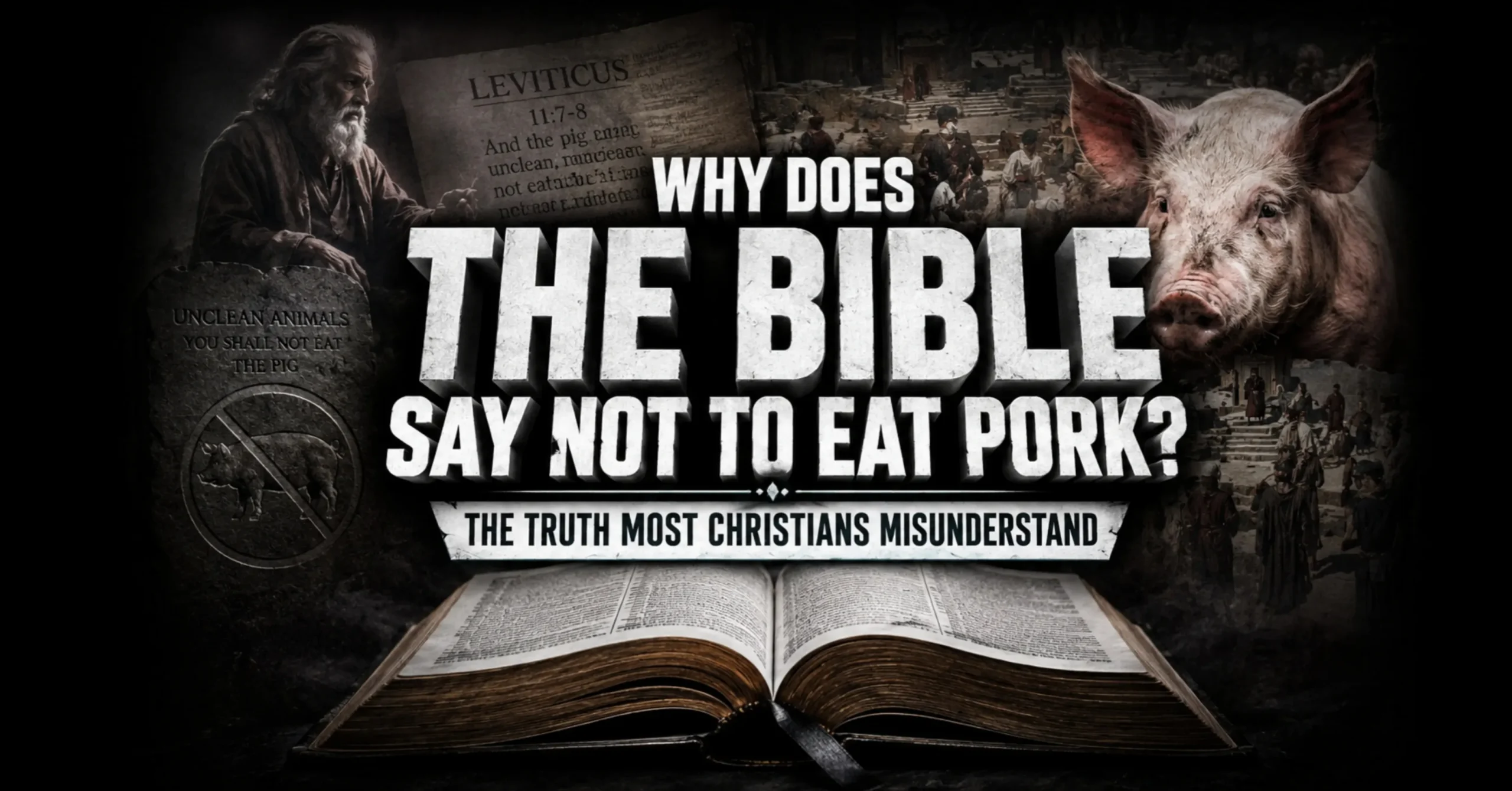
The question why does the Bible say not to eat pork often confuses many Christians and Bible readers. In the Old Testament, pork is clearly mentioned as “unclean,” leading many to wonder if this rule still applies today. However, when we move into the New Testament, the teachings of Jesus and the apostles seem to shift the understanding of food laws.
This creates an important question: is eating pork still a sin for Christians, or was it part of an old covenant that no longer applies? In this article, we will break down both perspectives in a simple and clear way so you can understand what the Bible actually teaches about pork and whether Christians are still bound by this restriction today.
Why Does the Bible Say Not to Eat Pork?
The reason behind why does the Bible say not to eat pork comes from the Old Testament dietary laws found in Leviticus 11. In these laws, pork is considered unclean because pigs do not chew the cud, even though they have split hooves.
This is why why is pork forbidden in the bible is often linked directly to God’s instructions for Israel to remain holy and set apart. The rule was not about health alone but about obedience and spiritual separation from other nations.
The classification of animals also explains why is the pig considered unclean, as it falls under the category of creatures that do not meet the “clean animal” criteria described in Leviticus dietary laws.
What Does “Unclean Food” Mean in the Bible?
In biblical terms, “unclean” refers to ceremonial purity under the Old Covenant, not moral sin. These rules were designed to shape Israel’s identity and obedience to God.
Leviticus dietary laws helped distinguish Israel from other nations
Clean vs unclean animals were clearly defined
Purpose was spiritual discipline, not eternal restriction
Did Jesus Say to Eat Pork? (New Testamen t Clarity)
Many readers searching why does the Bible say not to eat pork often ask an important question: did Jesus actually say that people can eat pork? The truth is, Jesus did not directly command people to eat pork or change dietary rules in a simple statement. Instead, He focused on a deeper spiritual message about purity and what truly defiles a person.
This is why the question did Jesus say to eat pork is often misunderstood. His teachings emphasized that moral impurity comes from the heart, not from external food laws.
A key passage connected to this topic is Mark 7:19, where Jesus explains that food does not enter a person’s heart but passes through the body. Many Christian interpretations see this as a shift in understanding Old Testament food restrictions.
Mark 7:19 Explained Simply
In Mark 7:19, Jesus teaches that food does not spiritually defile a person because it is processed by the body and eliminated. This is why many readers link it directly to the question mark 7:19 meaning in relation to pork and dietary laws.
The focus of this teaching is not about banning or allowing specific foods, but about shifting attention from external rituals to inner purity.
- Jesus emphasizes heart-based righteousness
- External food laws are not the core of salvation
- Spiritual purity matters more than dietary rules
What Does the New Testament Say About Eating Pork?
After understanding Jesus’ teachings, the next important part of the question why does the Bible say not to eat pork is what the New Testament actually teaches about food laws. Unlike the Old Testament, the New Testament does not repeat the strict dietary restrictions found in Leviticus.
In fact, many passages suggest a shift in focus from ritual purity to spiritual freedom under Christ. One of the most important moments is found in Acts 10, where Peter receives a vision showing that foods once considered unclean are no longer to be treated the same way.
This is why many Christians believe that dietary restrictions, including pork, are no longer binding under the new covenant.
Old Covenant vs New Covenant Food Rules
To understand what does the New Testament say about eating pork, it is important to compare the Old Covenant and New Covenant clearly.
Under the Old Covenant, food laws were strict and part of Israel’s identity. However, under the New Covenant established through Christ, the focus shifts from external rules to faith and spiritual transformation.
- Old Covenant: Strict dietary laws (Leviticus system)
- New Covenant: Freedom in food choices under grace
- Focus shifts from law compliance to heart-based faith
This transition is why passages like eating pork in the Bible New Testament are often understood as part of this larger shift in spiritual understanding.
Is Eating Pork a Sin for Christians Today?
One of the biggest questions believers ask after reading Old Testament food laws is: is eating pork a sin in the Bible for Christians today? Based on mainstream New Testament teaching, most Christians believe that eating pork is not considered a sin under the New Covenant.
The reason is that salvation and righteousness are no longer based on ceremonial food laws. Instead, the New Testament focuses on faith, obedience to Christ, and the condition of the heart.
This is why many theologians explain that Old Testament dietary restrictions were part of Israel’s covenant system and not universal moral commands for all Christians today.
Do Real Christians Not Eat Pork?
The question do real Christians not eat pork often comes from confusion between personal conviction and biblical requirement. Some Christians still avoid pork for cultural, health, or personal spiritual reasons, while others believe the New Testament gives freedom regarding food choices.
Different Christian groups interpret these passages differently, but most agree that eating pork is not what determines someone’s relationship with God.
- Some believers avoid pork by personal conviction
- Others freely eat pork under Christian liberty
- Faith and obedience matter more than dietary preference
This is also why many people ask is it a sin to eat pork as a Christian, especially when comparing Old Testament commands with New Testament teachings.
FAQ
Why does the Bible say not to eat pork?
The Old Testament classified pork as unclean under Israel’s dietary laws to symbolize holiness and obedience to God.
Why is pork forbidden in the Bible?
Pork was forbidden in Leviticus because pigs did not meet the clean animal requirements given to Israel under the Old Covenant.
Did Jesus say to eat pork?
Jesus did not directly command people to eat pork, but His teachings in Mark 7 shifted the focus from food laws to inner purity.
Is eating pork a sin for Christians today?
Most Christians believe eating pork is not a sin under the New Testament because salvation is not based on dietary laws.
What does Mark 7:19 mean?
Mark 7:19 explains that food does not spiritually defile a person, emphasizing purity of the heart over external food rules.
Conclusion
Understanding why does the Bible say not to eat pork becomes much clearer when we compare the Old and New Testaments together. In the Old Covenant, pork restrictions were part of Israel’s ceremonial laws and spiritual separation. However, the New Testament shifts the focus toward faith, grace, and inner purity rather than dietary regulations.
Today, most Christians believe that eating pork is a matter of personal conviction, not salvation. The deeper biblical message is about obedience to God and spiritual transformation, not simply the food placed on a table.

Juganta Kumbhar is a Christian pastor, blogger, and content creator who serves in ministry and a local church. He holds a postgraduate degree and has spent significant time writing and publishing Christian and Bible-related content across multiple websites. He also volunteers in social work, believing a life poured out for others is never wasted. He created ChristianPrayerLife to share the life of Christ honestly and warmly the way one friend talks to another hoping every reader who visits feels a little less alone and a little closer to God.