
The 7 Things God Hates in the Bible are listed in Proverbs 6:16–19: pride, lying, violence, evil plans, and actions that divide people. This short passage shows that God cares about more than our outward behavior. He also cares about the attitudes and intentions behind our choices.
Quick Answer: The 7 things God hates are:
- A proud look
- A lying tongue
- Hands that shed innocent blood
- A heart that devises wicked plans
- Feet that rush into evil
- A false witness who speaks lies
- A person who sows discord among others
Understanding this passage can help us spot harmful habits, treat others with care, and grow closer to God. The goal is not to live in fear of every mistake. It is to learn what Scripture teaches, take responsibility for our actions, and turn toward truth, humility, and love.
What Does Proverbs 6:16–19 Say About the 7 Things God Hates?
This section explains the passage in its setting, so we can read the list the way the author meant it.
The passage begins with the words, “These six things doth the LORD hate: yea, seven are an abomination unto him” (Proverbs 6:16, KJV). The phrase “six, yet seven” is a Hebrew numerical pattern used to build emphasis. It introduces a complete, pointed list and does not claim that God hates only seven things. Verse 17 names a proud look, a lying tongue, and hands that shed innocent blood. Verse 18 names a heart that devises wicked plans and feet that rush to evil. Verse 19 names a false witness who speaks lies and one who sows discord among brethren.
The surrounding verses add context. Proverbs 6:12–15 describes a worthless person who speaks dishonestly, signals harmful intentions, and keeps planning trouble, with sudden destruction as the result. Proverbs 6:20–23 then returns to a father’s instruction to his son, urging him to hold on to wise teaching. The list of 7 things God hates is not cold legalism. It is a parent’s warning about paths that wreck lives.
The Hebrew word to’evah, translated “abomination,” expresses moral revulsion toward what is detestable to God. These behaviors destroy trust, harm people, corrupt justice, and damage peace.
Does God hate people or sin? Scripture uses strong language about people who persist in evil (Psalm 5:5; Psalm 11:5). Proverbs 8:13 says that fearing the Lord means hating evil, and Proverbs 12:22 calls lying lips an abomination to Him. Yet Scripture also shows God’s love for sinners. John 3:16 says God loved the world, and Romans 5:8 says Christ died for us while we were still sinners. God’s rejection of evil and His offer of mercy exist together. He opposes what destroys people, and He invites them back to Himself.
- 1. A Proud Look
A proud look is an attitude of superiority that makes a person look down on others. It is the first of the 7 things God hates in Proverbs 6:17, and some Bible versions translate the phrase as “haughty eyes.”
Pride is not only boasting about money or success. It also shows up when we refuse to admit mistakes, ignore advice, or treat people as less valuable because of their background or abilities. Even Bible knowledge can feed pride if we use it to shame others. Paul describes a thorn in the flesh that kept him from becoming conceited (2 Corinthians 12:7). Philippians 2:3–8 points to Jesus, who took the position of a servant and shows what real humility looks like.
Try this instead: When someone corrects you, listen before you defend yourself. Admit the mistake, give credit where it is due, and remember that humility means respecting others, not pretending you have no value.
- 2. A Lying Tongue
A lying tongue uses words to deceive. Proverbs 6:17 condemns it because dishonesty destroys trust and goes against the truth God calls His people to speak.
Lies often look ordinary: denying a mistake at work, making a promise you do not plan to keep, or hiding facts to get ahead. A lie may feel easier in the moment, but it usually causes bigger problems when the truth comes out. John 8:44 links lying with the devil’s opposition to truth, and Proverbs 12:22 says lying lips are detestable to the Lord while those who act faithfully please Him. In John 14:6, Jesus calls Himself the way, the truth, and the life, which gives believers a strong reason to value honesty.
A simple next step: Tell the truth even when it is uncomfortable. If you have lied, admit it and correct the false information. Trust may take time to return, but honesty is where it starts.
- 3. Hands That Shed Innocent Blood
This phrase in Proverbs 6:17 refers to the wrongful taking of innocent life. It shows how seriously God takes violence and injustice.
Genesis 9:6 connects the value of human life to people being made in God’s image, and Exodus 20:13 forbids murder. Jesus goes deeper in Matthew 5:21–22, where He addresses anger and contempt and calls His listeners to examine the attitudes that can lead to harm. Hatred and revenge turn people into enemies instead of fellow human beings.
This does not mean every feeling of anger is the same as murder. Anger can signal that something is wrong, but we remain responsible for how we respond.
A question to ask yourself: Am I trying to solve this problem, or to hurt someone? Step away when you need to, seek wise help, and never use threats or violence. Forgiveness can be part of healing, but it does not require staying in danger or accepting abuse.
- 4. A Heart That Devises Wicked Plans
Proverbs 6:18 describes a heart that plans wrongdoing on purpose. It means thinking of ways to harm others, exploit them, or gain something dishonestly.
The problem starts when selfish desire turns into a plan that ignores another person’s well-being. Someone might manipulate a coworker to win a promotion, spread a false story about a rival, or use authority to take advantage of someone who trusts them. David’s actions in 2 Samuel 11 show how this works. He misused his power, arranged events that led to Uriah’s death, and tried to hide what he had done.
Not every unwanted thought is sin. A harmful idea can enter the mind without an invitation. The concern is knowingly feeding a desire to harm someone and then planning to act on it.
One practical habit: Ask what is driving your decisions. Are you seeking a fair solution, or trying to punish someone or profit at their expense? Philippians 4:8 encourages us to focus on what is true, just, pure, and worthy of praise.
- 5. Feet That Rush Into Evil
Proverbs 6:18 pictures feet that are quick to run toward wrongdoing. This person is eager for evil rather than resisting it.
Proverbs 1:16 says the feet of the wicked run to evil and hurry to shed blood, and Isaiah 59:7 describes the same pattern of rushing toward destructive acts. Harmful choices become a habit when people stop caring about the results.
Jesus gives a different example. In Matthew 4:1–11, He answered temptation in the wilderness with Scripture and refused to disobey His Father. Hebrews 4:15 says He was tempted yet without sin. Being tempted is not the same as choosing to do wrong, and James 4:7 calls believers to submit to God and resist the devil.
A simple next step: Notice the places and situations that keep pulling you toward bad choices. If an online group encourages cruelty, leave it. If anger makes you want revenge, pause before you reply.
- 6. A False Witness Who Speaks Lies
A false witness, another of the 7 things God hates, deliberately gives false information about another person. It is related to a lying tongue, but Proverbs 6:19 highlights the special damage of dishonest accusations.
Exodus 20:16 forbids bearing false witness against a neighbor. False accusations can ruin a reputation, shape important decisions, and even lead to unjust punishment. In 1 Kings 21, Jezebel arranged for false witnesses to accuse Naboth, which led to his death and let Ahab take his vineyard.
Today the same thing happens when someone spreads an unverified accusation at work, posts a false claim on social media, or repeats an online rumor as if it were proven. A group chat can turn speculation into a damaging story about someone who has no chance to respond.
Before you share: Check whether the claim is true and whether you have solid evidence. If you discover that you have spread false information, correct it clearly.
- 7. A Person Who Sows Discord Among Others
Proverbs 6:19 ends the list of 7 things God hates with anyone who deliberately stirs up conflict among brethren. It damages relationships by spreading suspicion and resentment.
Disagreement is not always wrong, and people can differ while still treating each other with respect. The problem is creating division on purpose through gossip, manipulation, or false claims. Imagine someone who shares one friend’s private message with another and adds misleading details. The anger grows, trust disappears, and a misunderstanding that could have been fixed becomes a lasting split. The same can happen in churches, families, workplaces, and online communities, where a rumor in a group chat or a hostile post can spread far beyond the original conversation.
Ephesians 2:14–17 presents Christ as our peace, and Matthew 5:9 blesses the peacemakers.
One practical habit: Stop repeating rumors, speak truthfully, and encourage people to talk to each other directly when it is safe. Peace must never mean hiding abuse or staying in danger.
How to Turn Away From the 7 Things God Hates and Receive God’s Forgiveness
This section shows what turning away from these 7 things God hates looks like in daily life, and why God’s grace gives real hope.
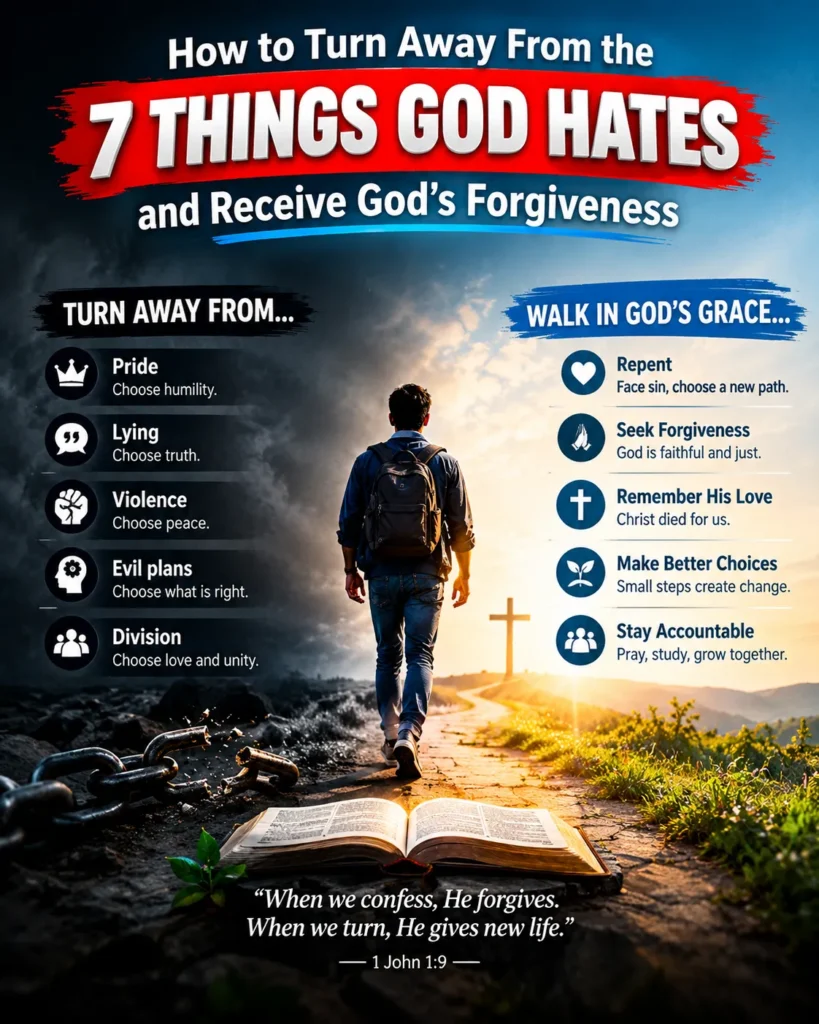
Repentance is not only feeling sorry. It means honestly facing sin and choosing a different path. Start by examining your heart. Psalm 139:23–24 models asking God to search us and show us harmful ways, without excuses or blaming others.
Next, repair the harm where you can. If you lied, tell the truth. If you spread a false accusation, correct it. If pride hurt a relationship, admit it and listen to the other person.
1 John 1:9 says God is faithful and just to forgive and cleanse those who confess their sins. That promise gives hope, but it is not permission to keep hurting others. Romans 5:8 says Christ died for us while we were still sinners, so we do not earn God’s love by becoming perfect first. Isaiah 55:7 calls the wicked to forsake their ways and return to the Lord, who will abundantly pardon.
Change usually begins with small choices. Pause before speaking in anger. Check facts before sharing a claim online. Admit mistakes instead of hiding them. Pray for humility, study Scripture, and lean on trustworthy believers who can encourage honest growth. If an old habit returns, do not give up. Confess it, seek forgiveness, and take the next right step. When serious harm has occurred, accountability and boundaries may also be needed.
Frequently Asked Questions
Does God hate people?
The Bible speaks of God’s opposition to wickedness, and it also declares His love for the world in John 3:16. These truths belong together. God takes sin seriously, yet He offers forgiveness and reconciliation through Christ.
Are these the only 7 things God hates?
No. Proverbs 6:16–19 highlights seven serious behaviors, but Scripture condemns other sins as well. This list is not a complete account of everything God opposes.
What is the difference between a lying tongue and a false witness?
A lying tongue describes dishonest speech in general. A false witness specifically means false claims or testimony against another person, which can cause serious injustice.
Can God forgive someone who commits these sins?
Yes. Scripture offers hope to those who confess their wrongdoing and turn to God. Forgiveness does not make harmful actions acceptable, and repentance includes seeking to change and repair damage where possible.
How can I avoid these behaviors in daily life?
Examine your motives, speak truthfully, resist harmful choices, and avoid spreading rumors. Prayer, Scripture, wise counsel, and personal accountability can help you build better habits.
Conclusion
The 7 Things God Hates in the Bible remind us to take pride, dishonesty, injustice, harmful intentions, and division seriously. Yet these warnings also invite us to grow in humility, truth, and peace. Through repentance and God’s grace, we can face our failures honestly, receive His forgiveness, and live in a way that reflects His character. Let Proverbs 6:16–19 guide you toward wiser choices and more loving relationships.

Juganta Kumbhar is a Christian pastor, blogger, and content creator who serves in ministry and a local church. He holds a postgraduate degree and has spent significant time writing and publishing Christian and Bible-related content across multiple websites. He also volunteers in social work, believing a life poured out for others is never wasted. He created ChristianPrayerLife to share the life of Christ honestly and warmly the way one friend talks to another hoping every reader who visits feels a little less alone and a little closer to God.