
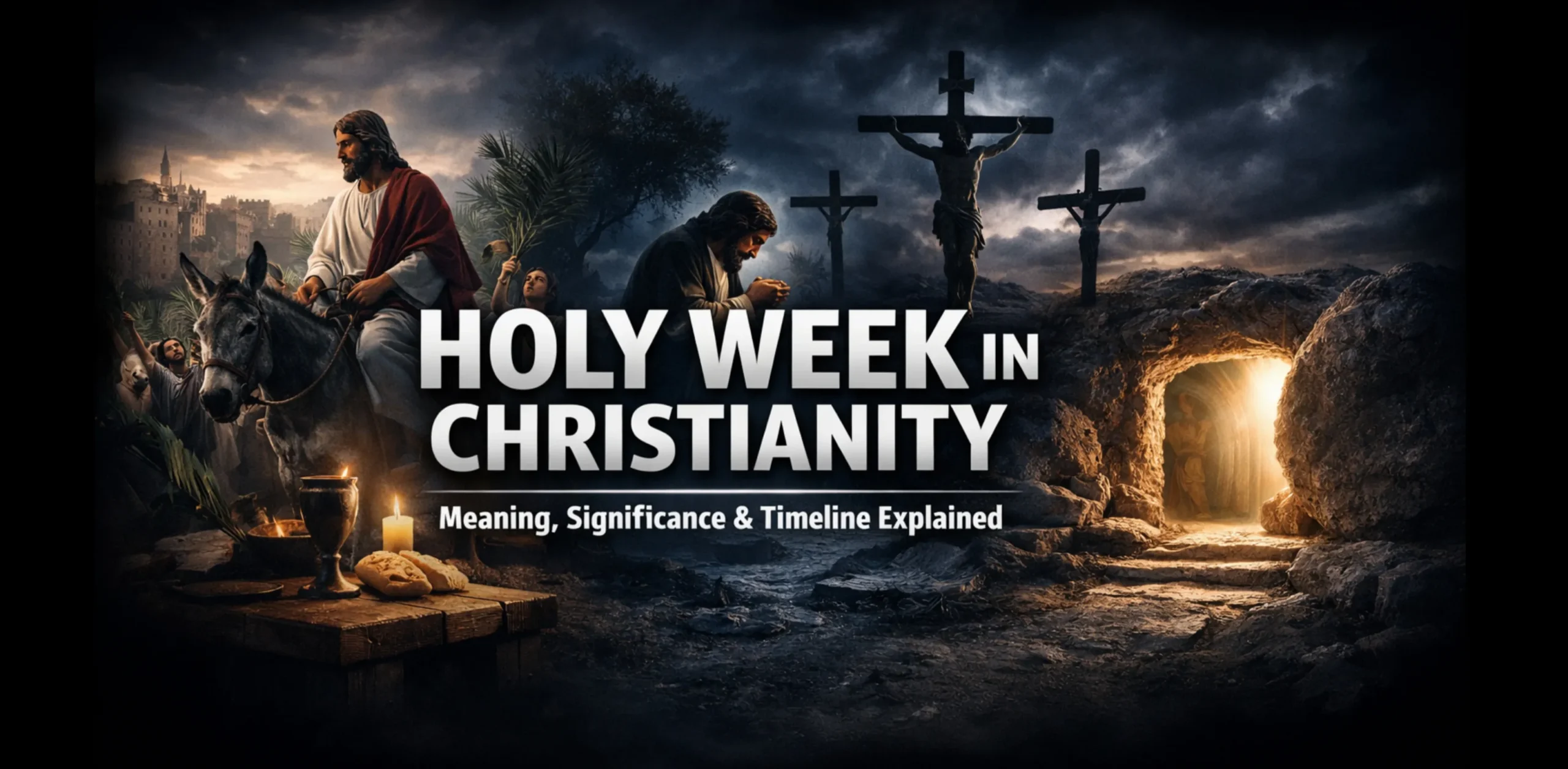
What is Holy Week in Christianity, and why does it matter so deeply to believers around the world? Holy Week is the most sacred period in the Christian calendar, marking the final days of Jesus Christ on earth leading to His crucifixion and resurrection.
Many people search for the meaning, significance, and timeline of Holy Week to better understand its spiritual importance. In simple terms, this week is about sacrifice, redemption, and hope. It begins with Palm Sunday and ends with Easter.
In this guide, you’ll discover what Holy Week is, why it matters, and the key events that define it.
What is Holy Week in Christianity? (Simple Explanation)
Definition of Holy Week
Holy Week in Christianity is the final week of Lent that remembers the last days of Jesus Christ before His resurrection. It begins with Palm Sunday, when Jesus entered Jerusalem, and ends with Easter, celebrating His victory over death.
In simple terms, Holy Week is a time when Christians reflect on the most important events of their faith—Jesus’ suffering, death, and resurrection.
Why It is Called “Holy”
This week is called “Holy” because it focuses on sacred events that changed human history. It highlights God’s love, sacrifice, and the promise of salvation, making it the most meaningful period for Christians worldwide.
What is the Significance of Holy Week in Christianity?
Spiritual Importance
The significance of Holy Week in Christianity lies in its message of sacrifice, redemption, and salvation. It reminds believers that Jesus Christ willingly suffered and died to forgive sins and restore humanity’s relationship with God. Each day of this week carries deep spiritual meaning, pointing to God’s grace and unconditional love.
Why It Matters to Christians
For Christians, Holy Week is not just historical it is deeply personal. It strengthens faith, encourages repentance, and renews hope. The events leading to Easter form the foundation of Christian belief, making this week a time for reflection, gratitude, and spiritual growth.
Holy Week Timeline Explained (Day-by-Day) —
Palm Sunday – Entry into Jerusalem
Jesus entered Jerusalem as a humble king, welcomed with palm branches. This moment symbolized peace and fulfilled prophecy.
Holy Monday to Wednesday
During these days, Jesus Christ taught in the temple, cleansed it from corruption, and prepared His disciples. It also includes the betrayal planned by Judas.
Maundy Thursday – The Last Supper
Jesus shared His final meal with His disciples, establishing the practice of communion and demonstrating humility through service.
Good Friday – Crucifixion
This is the day Jesus was crucified and died for humanity’s sins. It represents the ultimate sacrifice and love.
Holy Saturday & Easter
Holy Saturday is a day of silence and waiting. Easter Sunday celebrates Jesus’ resurrection, showing victory over death and giving believers eternal hope.
Why is Holy Week Important to Christians Today?
Faith Renewal
Holy Week helps believers renew their faith by focusing on the sacrifice of Jesus Christ. It reminds them of God’s love and strengthens their spiritual commitment.
Reflection and Repentance
This week encourages Christians to reflect on their lives, turn away from sin, and seek forgiveness. It becomes a time of personal spiritual growth and deeper connection with God.
Global Christian Observance
Around the world, Christians observe Holy Week through church services, prayer, and fasting. From Good Friday to Easter, believers unite in remembering and celebrating the core events of their faith.
Key Symbols of Holy Week and Their Meaning
The Cross
The cross is the central symbol of Holy Week. It represents the sacrifice of Jesus Christ and God’s love for humanity.
Palm Branches
Used on Palm Sunday, palm branches symbolize victory, peace, and the welcoming of Jesus as King.
Bread and Wine
These represent the body and blood of Christ, established during the Last Supper as a reminder of His sacrifice.
The Empty Tomb
The empty tomb, celebrated on Easter, symbolizes resurrection, hope, and new life for believers.
FAQs About Holy Week in Christianity
What is Holy Week in Christianity in simple words?
Holy Week is the final week before Easter that remembers the last days of Jesus Christ.
What is the significance of Holy Week in Christianity?
It represents Jesus’ sacrifice, death, and resurrection for humanity’s salvation.
When does Holy Week start and end?
It begins on Palm Sunday and ends on Easter Sunday.
Why is Good Friday important?
Good Friday marks the crucifixion of Jesus for the forgiveness of sins.
Conclusion
Holy Week in Christianity is a powerful reminder of sacrifice, love, and hope. From Palm Sunday to Easter, it tells the story of redemption through Jesus Christ. This sacred week invites believers to reflect, renew their faith, and embrace the message of salvation. Understanding its meaning and significance helps deepen spiritual life and strengthens one’s connection with God.