
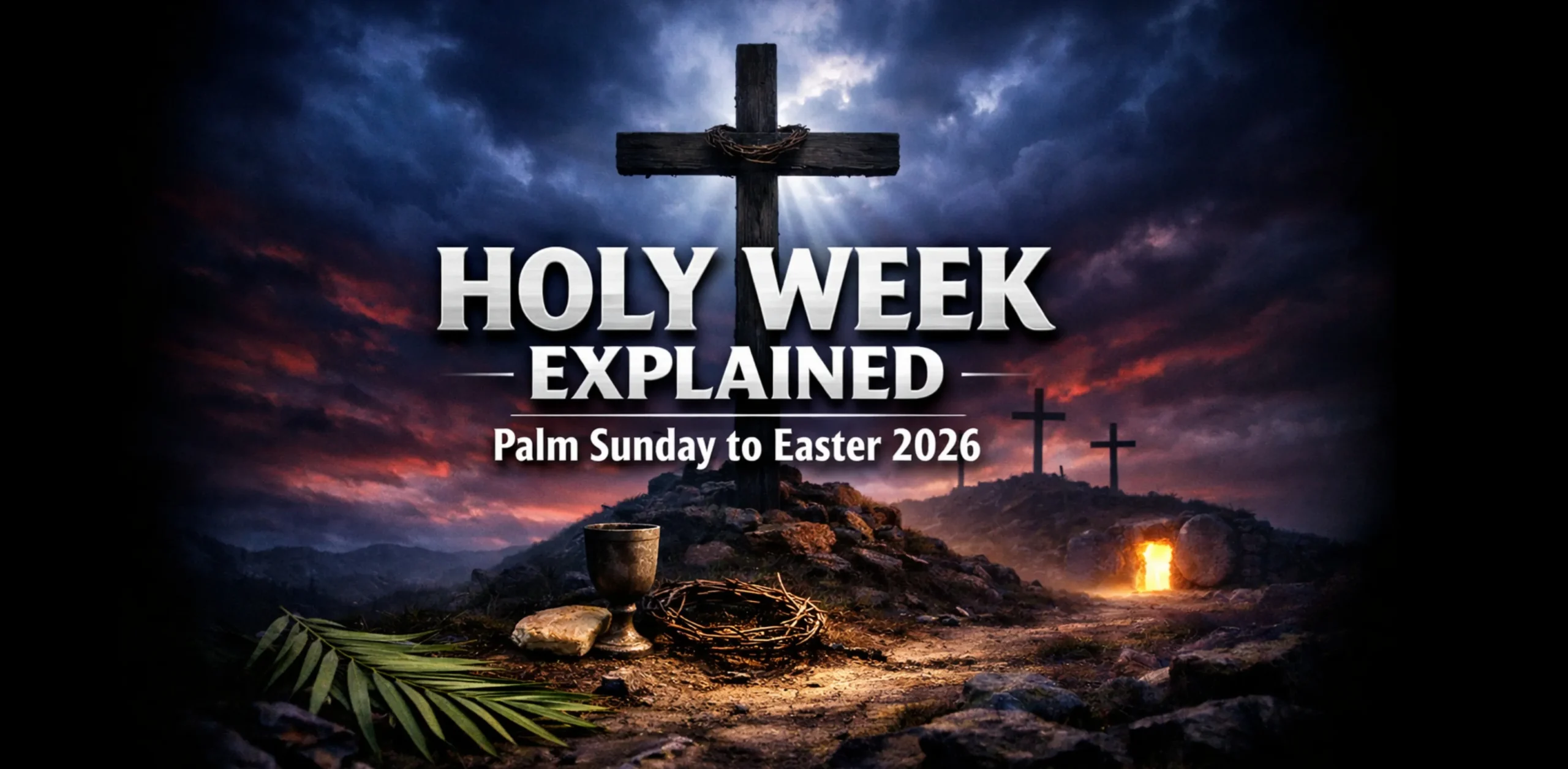
Holy Week explained simply it is the most important week in Christianity, marking the final days of Jesus Christ’s life, from Palm Sunday to Easter Sunday. Many believers know the names of these days, but not everyone fully understands their meaning, timeline, and powerful biblical events.
If you’ve ever felt confused about what happens each day or why this week matters so deeply, you’re not alone.
In this guide, you’ll discover the holy week meaning, a clear holy week timeline, and a complete day-by-day explanation of events. By the end, you’ll have a deeper understanding of its spiritual significance and how it applies to your faith today.
What is Holy Week & Why It’s Important in Christianity
Holy Week is the final week of Jesus Christ’s earthly life, leading up to His crucifixion and resurrection. It begins with Palm Sunday and ends with Easter Sunday, forming the foundation of Christian faith.
At its core, the holy week meaning is about:
- Jesus’ journey toward the cross
- His sacrifice for humanity’s sins
- The fulfillment of biblical prophecy
- The victory over death through resurrection
This week is often called “Passion Week” because it reflects the suffering (passion) of Jesus. Each day carries a specific event that reveals His mission, teachings, and ultimate purpose.
Holy Week holds unmatched importance in Christianity because it centers on the most powerful events of the faith:
- Foundation of Salvation → Jesus’ crucifixion and resurrection are central to Christian belief
- Spiritual Reflection → A time to examine faith, repentance, and devotion
- Fulfillment of Scripture → Prophecies from the Old Testament come true
- Renewal of Hope → The resurrection symbolizes new life and victory over sin
Practical reflection:
- Are we living according to Christ’s teachings?
- Do we truly understand His sacrifice?
- How can we grow spiritually during this time?
Days of Holy Week Explained (Palm Sunday to Easter Sunday)
The holy week timeline follows a clear sequence of events from Palm Sunday to Easter Sunday. These eight days capture the final journey of Jesus, moving from public celebration to sacrifice, and finally to resurrection.
Palm Sunday
- Jesus’ triumphal entry into Jerusalem
- Crowds welcomed Him with palm branches, shouting “Hosanna”
- Symbol of victory and peace
- Fulfillment of prophecy (Zechariah 9:9)
- Insight: Many praised Him as King, yet days later, the same crowd turned against Him, revealing how unstable human faith can be
Holy Monday
- Jesus cleanses the temple by driving out money changers
- Demonstrates Jesus’ authority and calls for spiritual purity
- Practical lesson: Faith should be genuine, not just ritual or profit-driven
Holy Tuesday
- Jesus teaches in Jerusalem, confronts religious leaders, and shares parables
- Engages in debates with Pharisees
- Insight: Truth often challenges authority and exposes hypocrisy
Holy Wednesday
- Known as “Spy Wednesday”
- Judas Iscariot plans to betray Jesus for silver
- Lesson: Spiritual failure often begins with small compromises
Maundy Thursday
- Commemorates the Last Supper and Jesus washing His disciples’ feet
- Establishes Holy Communion and the “new commandment” of love
- Practical meaning: True leadership is shown through service and humility
Good Friday
- Jesus is arrested, tried, and crucified
- Ultimate sacrifice for sin
- Insight: What looked like defeat was actually God’s plan for redemption
Holy Saturday
- A day of silence and waiting as Jesus rests in the tomb
- Represents grief and uncertainty
- Lesson: God is still working even in silence
Easter Sunday
- Jesus rises from the dead, defeating death
- Confirms His divine identity and brings hope
- Practical meaning: Resurrection represents new beginnings and victory in every believer’s life
Quick Summary Table of Holy Week Events
| Day | Event | Spiritual Meaning |
|---|---|---|
| Palm Sunday | Entry into Jerusalem | Celebration |
| Monday | Temple cleansing | Authority |
| Tuesday | Teachings & debates | Truth |
| Wednesday | Betrayal planned | Preparation |
| Thursday | Last Supper | Covenant |
| Friday | Crucifixion | Sacrifice |
| Saturday | Tomb | Waiting |
| Sunday | Resurrection | Victory |
Spiritual Lessons from Holy Week
Faith and Obedience
- Jesus remained faithful to God’s will, even in suffering
- Practical lesson: True faith is shown not just in comfort, but in difficult moments
Sacrifice and Love
- Good Friday reveals the depth of Jesus’ love
- Insight: Real love involves sacrifice, forgiveness, and putting others before ourselves
Hope and Resurrection
- Easter Sunday transforms sorrow into hope
- Practical meaning: No matter how difficult life feels, there is always hope beyond the struggle
FAQs
What is Holy Week explained simply?
Holy Week is the final week of Jesus’ life, from Palm Sunday to Easter, highlighting His sacrifice and resurrection.
What happens each day of Holy Week?
Each day has unique events: Palm Sunday’s entry, Last Supper, Crucifixion, and Resurrection on Easter.
What are the events of Holy Week in order?
Entry, teachings, betrayal, Last Supper, crucifixion, tomb, resurrection.
Why is Holy Week important for Christians?
It reveals God’s plan of salvation, Jesus’ sacrifice, and the hope of resurrection.
What is the timeline from Palm Sunday to Easter?
The week follows Jesus’ final journey from triumphal entry to resurrection victory.
Conclusion
Holy Week explained offers believers a complete understanding of its meaning, timeline, and biblical events. From Palm Sunday to Easter, each day teaches lessons of faith, obedience, love, and hope. By studying the days of Holy Week, we can reflect on Jesus’ ultimate sacrifice and apply His teachings to our daily lives.
Understanding these events strengthens spiritual growth and builds a deeper connection to God’s plan, helping believers embrace the hope and renewal Easter brings.
8 thoughts on “Holy Week Explained 2026: Meaning, Timeline, Days of Holy Week & Key Events”