
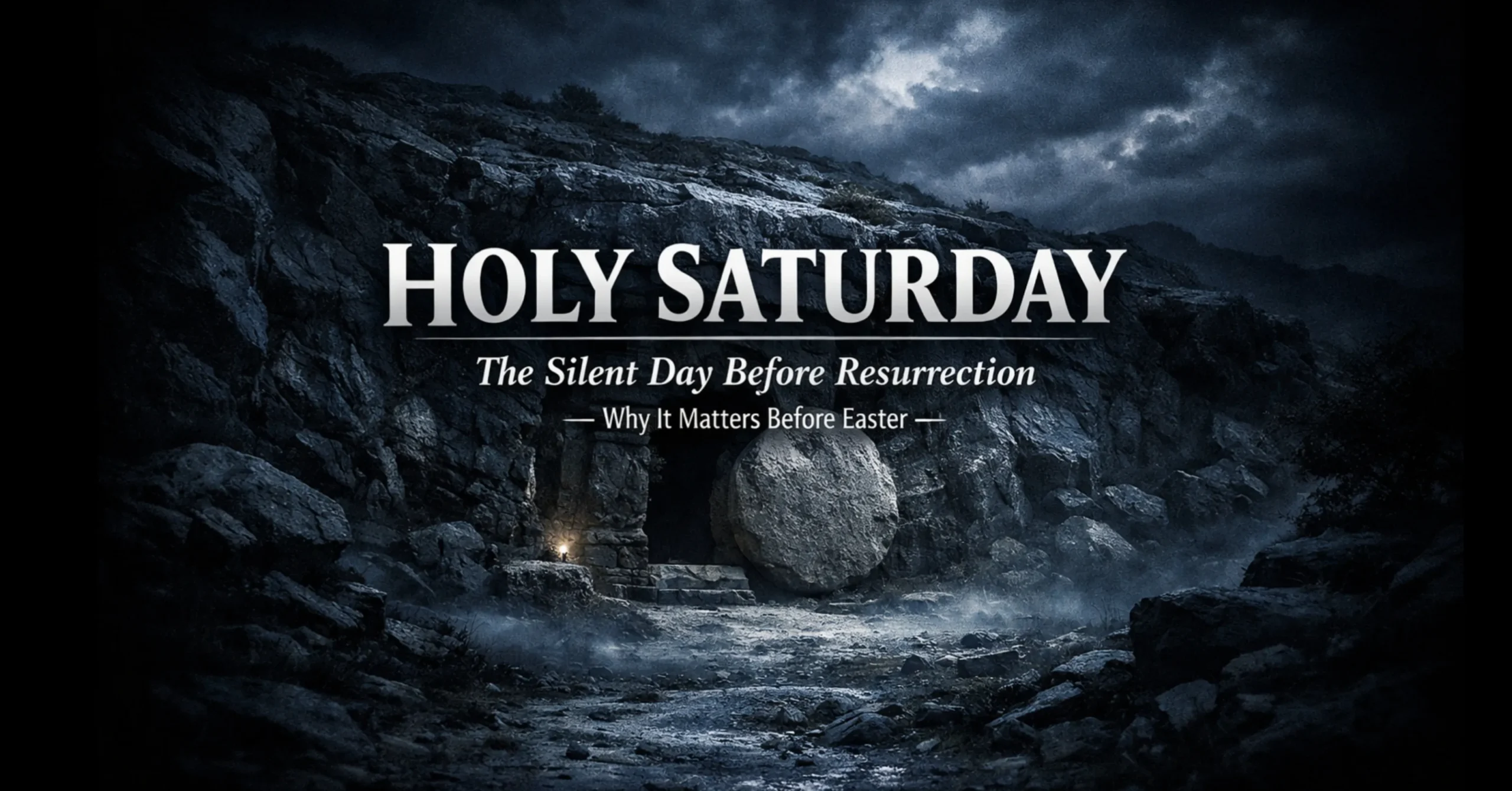
Holy Saturday is one of the most overlooked days in the Christian calendar, yet it carries deep spiritual meaning. Coming between Good Friday and Easter Sunday, this day represents a powerful moment of silence, waiting, and hidden hope. Many believers often ask, what is Holy Saturday and why it matters so much in Holy Week.
Understanding the Holy Saturday meaning helps us see that even when nothing seems to be happening, God is still at work. This day reminds us of the quiet time when Jesus lay in the tomb, and the world waited for the promise of resurrection. In this article, we will explore what Holy Saturday truly means, its significance, and its message for our lives today.
What Is Holy Saturday?
Definition and Place in Holy Week
Holy Saturday is the final day of Holy Week, observed between Good Friday and Easter Sunday. It marks the time when Jesus Christ lay in the tomb after His crucifixion. This day represents a pause in the timeline of salvation a moment where everything seems still.
In simple terms, if someone asks what is Holy Saturday, it is the day of waiting between suffering and victory. It completes the journey from the cross to the resurrection.
Simple Explanation for Beginners
For beginners, Holy Saturday can be understood as a day of silence and reflection. There are no major recorded events in the Bible on this day, which makes it spiritually unique.
It is a reminder that:
- Not every moment is active
- Some of God’s greatest works happen in silence
- Waiting is also part of faith
What Is the Meaning of Holy Saturday?
The True Meaning Explained
The Holy Saturday meaning centers on silence, waiting, and unseen divine work. After the pain of Good Friday, this day reflects a moment where hope seems hidden. Jesus is in the tomb, and for His followers, everything appears uncertain.
If we define what is the meaning of Holy Saturday, it is the space between promise and fulfillment — a time when God’s plan is still unfolding, even though nothing visible is happening. This makes it deeply relatable to real life, where we often wait without clear answers.
Why It Is Called the Silent Day
Holy Saturday is often called the “silent day” because the Bible records no major public events during this time. There are no miracles, no teachings, and no visible action.
But this silence is not empty it is meaningful.
It teaches that:
- God is still working, even in stillness
- Silence does not mean absence
- Faith grows strongest in waiting seasons
This is what makes Holy Saturday spiritually powerful and deeply significant.
What Happened on Holy Saturday?
Jesus in the Tomb
On Holy Saturday, Jesus’ body lay in the tomb after His crucifixion. According to the Gospels, He was buried by Joseph of Arimathea, and the tomb was sealed. This moment represents the complete stillness after the suffering of the cross.
From a human perspective, it looked like the end. The disciples were in fear and confusion, unsure of what would come next. This quiet period is central to understanding Holy Saturday, as it reflects a time when God’s plan was hidden but still moving forward.
Guarding of the Tomb
The religious leaders, concerned about Jesus’ prophecy of resurrection, requested that the tomb be secured. As recorded in Matthew 27:62–66, guards were placed at the tomb, and a seal was set to prevent any interference.
This action shows that even in silence, there was tension and expectation. While the world tried to control the situation, God was preparing for the greatest miracle the resurrection.
Holy Saturday Significance for Christians
Spiritual Importance
The Holy Saturday significance lies in its position between death and resurrection. It is the bridge between the sorrow of Good Friday and the joy of Easter Sunday. For Christians, this day reflects a deep spiritual truth that God’s plan continues even when it seems paused.
It teaches that faith is not only about miracles and breakthroughs, but also about trusting God in the middle of uncertainty. This is where the Holy Saturday meaning becomes personal, especially during difficult seasons of life.
Message of Hope in Silence
Holy Saturday carries a quiet but powerful message: hope is never lost, even when it feels hidden. The silence of this day is not defeat it is preparation.
For believers, it reminds us:
- Waiting is part of God’s process
- Silence often comes before breakthrough
- God is working behind the scenes
This makes Holy Saturday deeply meaningful, offering encouragement to anyone going through a season of waiting or uncertainty.
Holy Saturday Bible Verses
Key Scriptures
While Holy Saturday is a day of silence, a few Bible passages help us understand what was happening during this time. These verses provide context and deepen our reflection.
- Matthew 27:62–66 – The tomb is sealed and guarded
- Luke 23:55–56 – The women prepare spices and rest on the Sabbath
- Psalm 16:10 – A prophetic verse pointing to resurrection
These Holy Saturday Bible verses highlight a moment of stillness, yet they point toward the coming victory. Even in silence, Scripture reveals that God’s plan was unfolding.
Spiritual Lessons from Holy Saturday
Trusting God in Silence
Holy Saturday teaches one of the hardest lessons in faith trusting God when nothing seems to be happening. There are moments in life when prayers feel unanswered and situations don’t change.
This day reminds us that:
- God is working even when we cannot see it
- Silence is not rejection
- Faith grows stronger in stillness
Just like the disciples didn’t understand what was coming next, we too often walk through seasons where clarity is missing yet God remains in control.
Waiting Season in Life
Holy Saturday represents the “in-between” moments not the pain of Good Friday, and not yet the joy of Easter. It reflects real-life waiting seasons where we are caught between struggle and breakthrough.
In these moments:
- Waiting builds patience and trust
- God prepares us before the miracle
- Every delay has a purpose
This makes Holy Saturday deeply personal, showing that even in waiting, something meaningful is happening.
FAQs:
What is Holy Saturday?
The final day of Holy Week when Jesus lay in the tomb before His resurrection.
What is the meaning of Holy Saturday?
A day of silence and waiting, reflecting faith in God’s unseen plan.
Why is Holy Saturday important?
It bridges the sorrow of Good Friday and the joy of Easter Sunday.
What happened on Holy Saturday?
Jesus’ body rested in the tomb while guards secured it, awaiting resurrection.
Conclusion
Holy Saturday is a day of deep reflection, silence, and preparation. The Holy Saturday meaning reminds believers that even in stillness, God is working, and hope is never lost. By understanding its significance, studying the Bible verses, and embracing its spiritual lessons, Christians are encouraged to trust God in waiting seasons.
This day strengthens faith, prepares hearts for resurrection, and highlights that God’s greatest work often happens quietly behind the scenes