
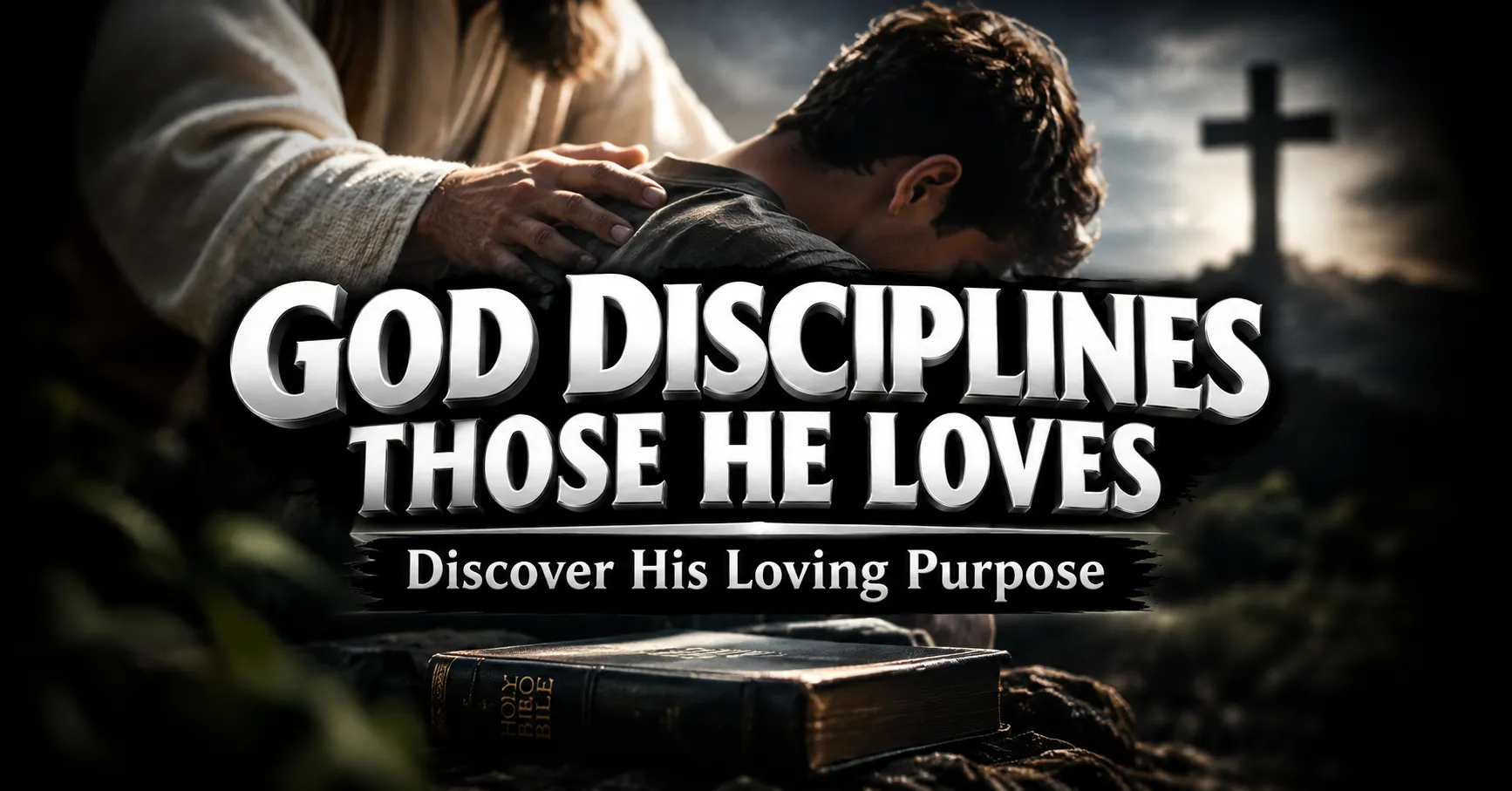
When someone says God disciplines those He loves, the words can bring comfort or a knot in the stomach. If God loves me, why would He allow correction, hardship, or pain? The question is honest, and Scripture gives it a careful answer.
The clearest answer is in Hebrews 12:5–11, which draws on Proverbs 3:11–12 and pictures a father training his children. Revelation 3:19 adds a parallel, where Jesus ties rebuke to love and repentance. This article walks through what the passage means, why God does it, and how to respond. It also explains where Christians should be careful, because not every painful event is a message from God.
God Disciplines Those He Loves: Bible Verse, Meaning, and Context
The key verse is Hebrews 12:6: “For the Lord disciplines the one he loves, and chastises every son whom he receives” (ESV). The writer is quoting Proverbs 3:11–12, where a father urges his son not to despise the Lord’s correction, because the Lord corrects the one He loves, as a father does the son in whom he delights. Revelation 3:19 echoes the same pairing: Jesus rebukes and disciplines those He loves, then calls them to be earnest and repent.
Context matters here. Hebrews was written to Jewish Christians who had already endured public insults and the loss of property (Hebrews 10:32–34). In 12:3–4, the writer reminds them that they had not yet resisted to the point of shedding blood. So the passage is not mainly about punishing sin. It reframes their hardship as training, something God could use to strengthen them while they stayed faithful.
The Greek word behind “discipline” and “chasten” is paideia, which refers to a child’s training, upbringing, and education. That is why the word is broader than punishment. A parent who practices paideia teaches, guides, corrects, and prepares a child for adulthood.
Translations vary in wording. The KJV and NKJV use “chasten,” while the NIV and ESV commonly use “discipline.” The idea is the same: a Father who cares enough to shape His children rather than leave them on a harmful path.
Why Does God Discipline Those He Loves?
Hebrews 12:10 gives the central reason: God disciplines His children for their good, so that they may share His holiness. Several purposes sit under that goal.
- Correction. Love does not ignore what is damaging a person’s relationship with God or with others.
- Repentance. Revelation 3:19 places Christ’s discipline next to a call to repent. The aim is to turn the heart back, not to pile on guilt.
- Obedience. Trust, humility, and forgiveness are learned over time, and God trains His children in them.
Hebrews 12:8 adds a point that can sound harsh if read alone. The writer says that anyone left without discipline would not be a true child. Read in context, this is encouragement for suffering believers: the hard training they were enduring was a sign that they belonged to God, not that He had rejected them. It is a word of assurance, not a threat.
How Does God Discipline His Children?
Scripture describes several ways, and none should be turned into a formula.
God often corrects through His Word, which exposes attitudes and actions that do not match His will. He also works through teaching and wise counsel. A pastor or mature believer may see something we cannot, and when the correction agrees with Scripture and comes with humility, it can be a real gift.
Consequences can also play a role. Repeated dishonesty damages trust, and a refusal to forgive can carry bitterness into every relationship. Those moments can help a person see where a path leads. God may also use hard circumstances to build endurance and expose misplaced priorities.
Still, we should not label every consequence or difficulty as a direct act of divine discipline. Hebrews 12 connects hardship and training, but it does not give us the ability to read God’s purpose into each event.
Is God’s Discipline the Same as Punishment?
Not in the way most people mean it. In everyday speech, punishment is payment for wrongdoing. In Hebrews 12, discipline is a father’s training of his children, aimed at their good. It can hurt, and the passage admits that, but its purpose is correction and growth, not payback.
The difference rests on the cross. Isaiah 53:5 says the punishment that brought us peace was laid on Christ, and Hebrews 10:10–14 says His one sacrifice has perfected for all time those who are being made holy. For that reason, Romans 8:1 can say there is no condemnation for those in Christ Jesus. Consequences, correction, and training may remain in a believer’s life, but the penalty for sin has already been dealt with. That is the difference between corrective and penal.
First Corinthians 11:32 fits this picture. Paul says that when believers are judged by the Lord, they are disciplined so that they will not be condemned along with the world. Discipline, then, is never proof that God has given up on you.
Does Every Hardship Mean God Is Disciplining You?
No. This is one of the most important cautions in the whole subject. When something goes wrong, it is easy to assume God must be punishing us. Scripture does not allow that shortcut.
Job’s friends insisted that his suffering had to come from hidden sin, and the book rejects that explanation. In John 9, the disciples asked whose sin caused a man’s blindness, and Jesus refused to trace it to either the man or his parents. In Luke 13, He rejected the idea that people who died in a tragedy were worse sinners than everyone else. James 1:2–4, meanwhile, shows that trials can build endurance and maturity, and believers may suffer simply because they follow Christ.
So a hardship might expose something God wants changed. It might be the result of our own choices. It might be an ordinary part of living in a broken world. Often we will not know. We can examine our hearts in the light of Scripture without claiming to understand God’s hidden purposes.
A word of care is needed here. The teaching that God disciplines His children has sometimes been misused to excuse harsh parenting, abuse, or cruelty. Hebrews 12 describes a loving and wise Father, and Ephesians 6:4 tells fathers not to provoke their children to anger. No one should ever be told to simply accept abuse as God’s discipline. If you are being harmed, seek safety and talk with someone you trust.
How Can I Know If God Is Disciplining Me?
There is no quick formula, but a few questions help. Start with Scripture: does God’s Word clearly call this behavior sin? If so, you do not need a mysterious sign. Then look honestly at your heart for pride, bitterness, unforgiveness, or disobedience you have been avoiding. Ask whether the situation is leading you toward repentance, and whether there is a plain link between a choice and its result. Prayer and the counsel of a mature believer can add clarity.
A simple checklist can help:
- Does Scripture name a specific sin?
- Is there a real call to repent?
- Am I confusing consequences with God’s judgment?
- Am I assuming something God has not revealed?
- Is this moving me toward humility and trust?
Some readers need a different word. If you struggle with constant guilt, or fear that God is always angry with you, notice the difference. God’s conviction is usually specific, and it leads toward repentance and hope. Constant, vague self-condemnation does not, and Romans 8:1 reminds believers that there is no condemnation in Christ. Talk with a pastor or trusted Christian counselor, and if the distress feels overwhelming, a licensed mental health professional can help too.
Biblical Examples of God’s Discipline
Israel in the wilderness is the first picture. Deuteronomy 8:5 tells the people to know that the Lord was disciplining them as a man disciplines his son. Their forty years involved testing, hunger, and dependence, all meant to teach them to trust Him.
David’s confrontation in 2 Samuel 12 shows correction through a prophet. Nathan exposed David’s sin, David confessed, and he still faced painful consequences. Forgiveness and consequences were both real.
In Corinth, Paul addressed abuses at the Lord’s Supper in 1 Corinthians 11. He said the Lord’s judgment on them was discipline, so that they would not be condemned with the world.
In Laodicea, Revelation 3 shows Jesus confronting a lukewarm church. His rebuke is sharp, but it comes with love and a clear invitation to repent: He stands at the door and knocks (3:20).
Not every difficult event in the Bible is a discipline story, so each example deserves careful reading.
What Does Discipline Produce in a Believer’s Life?
Hebrews 12:11 states the promise plainly: “For the moment all discipline seems painful rather than pleasant, but later it yields the peaceful fruit of righteousness to those who have been trained by it” (ESV). The writer does not hide that training hurts. He asks readers to look past the moment.
The fruit is holiness, a life that increasingly reflects God’s character, not just short-term better behavior. It includes righteousness, as believers learn to choose well and treat others rightly. And it includes peace, which does not mean every problem disappears, but that a person walking in obedience gains a steadiness that guilt and avoidance never gave.
The pattern is worth remembering: Discipline → Training → Holiness → Righteousness → Peace.
How Should Christians Respond to God’s Discipline?
Hebrews 12 warns against two extremes: making light of discipline and losing heart under it. In their place, it calls believers to endure and learn.
When Scripture exposes sin, repent rather than make excuses. When correction comes, choose humility over defensiveness. Learn the lesson so you do not repeat it. Hebrews 12:9 invites us to submit to the Father of spirits and live. And trust Him, because correction understood as fatherly love becomes an invitation to come closer rather than hide.
Does God Still Discipline Christians Today?
Yes. Hebrews 12 presents discipline as part of a lasting relationship between God and His children, and believers still struggle with pride, fear, and misplaced priorities.
Applying this takes humility, though. Instead of declaring that an illness or a setback is punishment, ask better questions. What does Scripture say here? Is there something I need to repent of? What can I learn? Where do I need to trust God?
Frequently Asked Questions About God’s Discipline
Does God discipline those He loves?
Yes. Hebrews 12:6 ties God’s discipline directly to His love for His children. It is not rejection. It is the care of a Father who wants His children to grow rather than drift. Proverbs 3:11–12 gives the Old Testament root.
What Bible verse says God disciplines those He loves?
Hebrews 12:6 is the best-known verse, and it should be read with 12:5–11. Proverbs 3:11–12 is its source, and Revelation 3:19 gives a parallel from Jesus’ words to a church.
Does God discipline His children?
Yes. Hebrews 12:7 tells believers to endure hardship as discipline, since God is treating them as sons. The passage assumes a relationship already exists. Discipline belongs to children, not strangers.
Is God’s discipline the same as punishment?
Not in the penal sense. Christ bore the penalty for sin (Isaiah 53:5), so a believer’s discipline is corrective. Training and consequences may remain, but condemnation does not (Romans 8:1).
Does God still discipline Christians today?
Yes. Believers still need correction and growth, and Hebrews 12 describes an ongoing Father-child relationship. Christians today should respond with humility, not by labeling every difficulty as punishment.
A Prayer for Understanding God’s Discipline
Heavenly Father, give me wisdom and humility when You correct me. When Your Word shows me something that needs to change, give me the courage to repent instead of making excuses.
Help me tell the difference between Your loving correction and the fears I create in my own mind. Teach me to receive training without losing heart, and produce in me holiness, righteousness, and peace. When I do not understand what You are doing, help me trust Your character and Your love.
Thank You for being a Father who does not abandon His children. In Jesus’ name, Amen.
Final Thoughts on God’s Loving Discipline
The message of Hebrews 12 is both serious and comforting. God’s correction is not evidence that He has stopped loving you. When Scripture exposes sin, you can repent. When correction comes, you can answer with humility. When the reason for a hard season is unclear, you can still trust the Father who trains His children for their good.
If you are in a season of correction, do not assume He has turned away. Search His Word, seek wise counsel, and keep walking toward Him.

Juganta Kumbhar is a Christian pastor, blogger, and content creator who serves in ministry and a local church. He holds a postgraduate degree and has spent significant time writing and publishing Christian and Bible-related content across multiple websites. He also volunteers in social work, believing a life poured out for others is never wasted. He created ChristianPrayerLife to share the life of Christ honestly and warmly the way one friend talks to another hoping every reader who visits feels a little less alone and a little closer to God.