
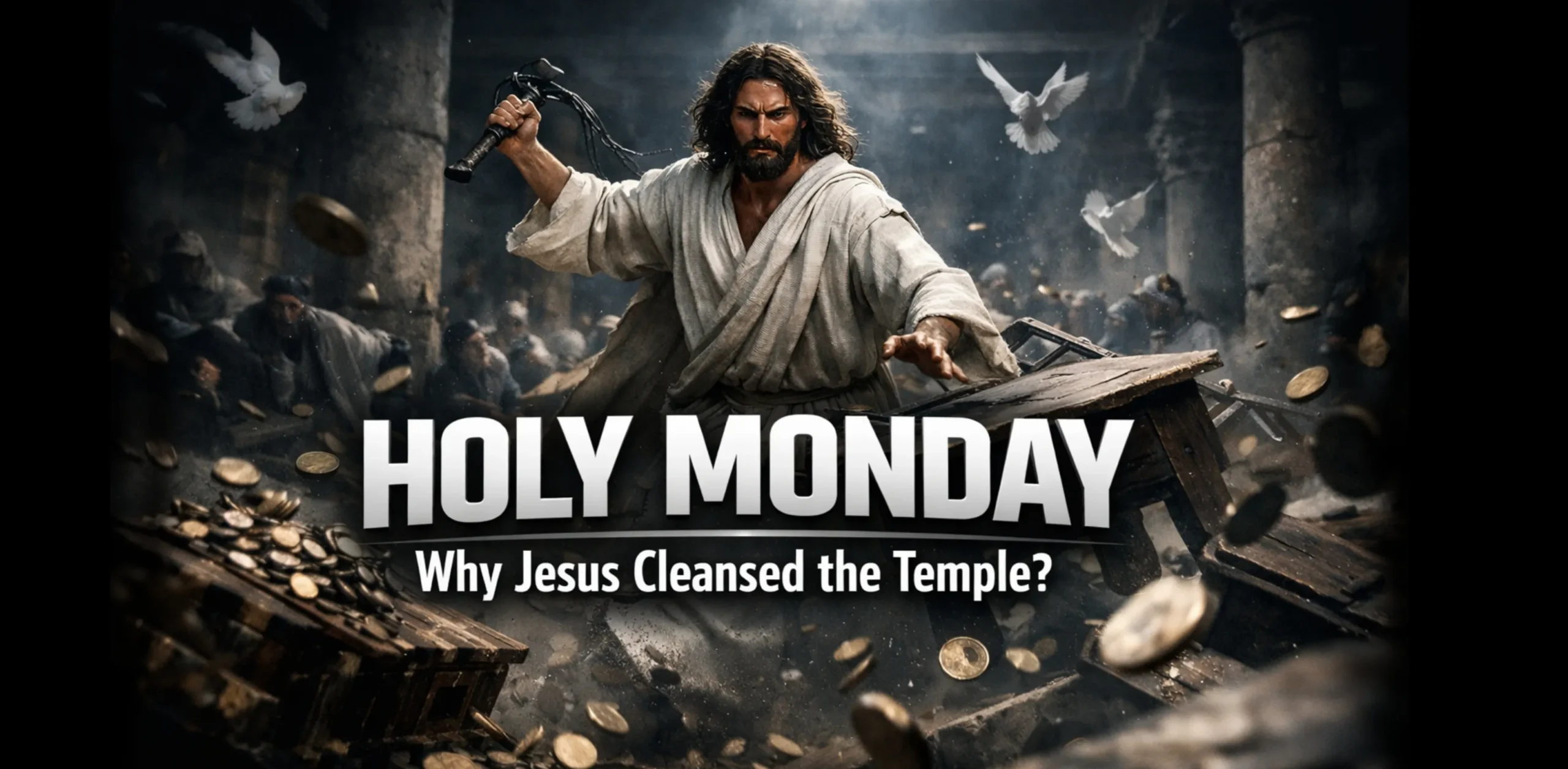
Holy Monday meaning often raises a powerful question: why did Jesus show anger inside the temple? This moment, recorded in the Bible, is not just a historical event it carries deep spiritual significance for every believer today. On Holy Monday, Jesus cleansed the temple in Jerusalem, confronting corruption and restoring the true purpose of worship.
Understanding Holy Monday meaning helps us see beyond the surface of the story. It reveals why Jesus’ actions were necessary and what they teach about faith, purity, and devotion. In this article, you’ll discover what really happened, why it matters, and how its message still applies to our lives today.
What is Holy Monday Meaning in the Bible?
Definition of Holy Monday
Holy Monday is the second day of Holy Week, the sacred period leading up to Easter. It follows Palm Sunday, when Jesus entered Jerusalem, and marks the beginning of more serious and confrontational events in His ministry.
In simple terms, Holy Monday meaning centers on purification and truth. It highlights Jesus’ mission to restore what was broken especially in places meant for worship. This day is not just about history; it represents a call to examine the condition of our own hearts.
Connection to Jesus’ Actions
The most important event linked to Holy Monday is when Jesus entered the temple and saw corruption taking place. Instead of prayer and devotion, the temple had become a marketplace filled with money changers and merchants.
Jesus responded by driving them out, declaring that God’s house should be a place of prayer, not profit. This powerful act defines the true holy week monday significance a moment where Jesus challenged hypocrisy and restored spiritual integrity.
Why This Meaning Matters
Holy Monday reminds believers that faith is not about outward rituals alone. It’s about sincerity, purity, and respect for God’s presence.
It teaches that:
- Worship should be genuine, not commercial
- Faith should be clean from hypocrisy
- God values the condition of the heart more than external actions
What Happened on Holy Monday?
Jesus in Jerusalem
After His triumphal entry on Palm Sunday, Jesus returned to Jerusalem on the next day what we now recognize as Holy Monday. The city was crowded with pilgrims, and the temple was the center of religious activity.
At this point, expectations around Jesus were rising. Many saw Him as a prophet or even the Messiah. But instead of seeking popularity, Jesus chose to confront a deeper problem within the heart of worship itself.
The Temple Scene
When Jesus entered the temple, He encountered a system that had shifted far from its original purpose. Instead of a peaceful place of prayer, it had become noisy and commercial.
Inside the temple courts:
- Money changers were exchanging currency for profit
- Merchants were selling animals for sacrifices at inflated prices
- Worship had turned into a business transaction
This setting provides the foundation for the bible temple cleansing story, showing how sacred space was being misused for personal gain.
The Cleansing Event
Seeing this corruption, Jesus took decisive action. He overturned tables, drove out the sellers, and stopped the ongoing exploitation. His words were direct and powerful God’s house was meant to be a house of prayer, not a marketplace.
This moment defines what happened on Holy Monday. It was not an act of uncontrolled anger, but a deliberate stand against injustice and spiritual corruption. Jesus was restoring the true purpose of worship and calling people back to sincerity.
Why Did Jesus Cleanse the Temple?
Corruption in Worship
By the time Jesus entered the temple, worship had become deeply corrupted. What was meant to be a sacred place for prayer had turned into a system driven by profit and exploitation.
People coming to worship were often taken advantage of:
- Animals for sacrifice were sold at unfair prices
- Currency exchange was manipulated for gain
- Religious leaders allowed this system to continue
This explains why did Jesus cleanse the temple He was confronting a system that misused faith for personal benefit.
House of Prayer vs Marketplace
Jesus made a clear distinction between what the temple was meant to be and what it had become. He declared that God’s house should be a place of prayer for all people, not a center of business.
This contrast is central to understanding the jesus cleansed temple meaning:
- A house of prayer represents connection with God
- A marketplace represents distraction and greed
By removing the merchants, Jesus restored the temple’s original purpose true, undistracted worship.
Jesus’ Authority and Righteous Anger
Jesus’ actions were not driven by uncontrolled emotion but by righteous anger. His response showed authority and a deep commitment to God’s holiness.
This moment reveals:
- Jesus’ authority over religious practices
- His rejection of hypocrisy
- His desire for genuine faith
The cleansing of the temple was a bold statement. It showed that God cares not only about worship itself, but about how and why it is offered.
Jesus Cleansed Temple Meaning (Spiritual Insight)
Symbol of Inner Cleansing
Beyond the physical act, this event carries a deep spiritual message. The temple was not only a building it also represents the human heart. Just as Jesus removed corruption from the temple, believers are called to remove anything that pollutes their inner life.
The jesus cleansed temple meaning points to personal reflection:
- Are there distractions replacing true faith?
- Has devotion become routine instead of sincere?
It’s a reminder that spiritual cleansing begins within.
Judgment on Hypocrisy
Jesus’ actions were also a direct challenge to religious hypocrisy. Outwardly, everything looked correct rituals were being performed but inwardly, the intention was corrupted.
This shows that:
- God values authenticity over appearance
- Religious activity without sincerity has no true meaning
The temple cleansing highlights how easily faith can become superficial if the heart is not aligned with God.
Message for Believers Today
The meaning of this event is still relevant today. It calls believers to examine their faith honestly and remove anything that weakens their relationship with God.
In practical terms, it teaches:
- Keep worship focused and genuine
- Avoid mixing faith with selfish motives
- Maintain spiritual discipline and integrity
This deeper understanding of temple cleansing significance transforms the story from a historical event into a personal spiritual lesson.
Holy Week Monday Significance for Us Today
What Holy Monday Teaches
Holy Monday is not just about what happened in the past it carries a message for everyday faith. It reminds believers that God desires sincerity, not just religious routine.
The holy week monday significance lies in this truth:
- Faith must be real, not performative
- Worship should come from the heart
- God values honesty over outward display
This day challenges us to look beyond traditions and focus on a genuine relationship with God.
Removing Sin from Life
Just as Jesus removed corruption from the temple, believers are called to remove sin and distractions from their lives. This is where the spiritual meaning of holy monday becomes personal.
It encourages:
- Self-examination of thoughts and actions
- Letting go of habits that weaken faith
- Creating space for spiritual growth
Holy Monday becomes a reminder that transformation starts within, not outside.
Living with a Pure Faith
The final lesson of Holy Monday is about maintaining purity in faith. It’s not a one-time cleansing but a continuous process of staying aligned with God’s truth.
Believers can apply this by:
- Practicing honest prayer
- Staying consistent in faith
- Avoiding hypocrisy in daily life
This makes Holy Monday a powerful call to live with integrity and devotion, not just during Holy Week but every day.
FAQs About Holy Monday Meaning
What is the meaning of Holy Monday?
Holy Monday meaning reflects Jesus cleansing the temple and restoring true worship.
Why did Jesus get angry in the temple?
Jesus showed righteous anger because the temple was misused for profit instead of prayer.
What is the temple cleansing story?
It is the Bible event where Jesus drove out money changers to purify God’s house.
Conclusion
Holy Monday meaning goes beyond a historical event it reveals Jesus’ call for purity, sincerity, and true worship. The cleansing of the temple reminds us to examine our hearts, remove spiritual distractions, and stay aligned with God. This message strengthens faith and builds a deeper, more authentic relationship with Him.

Juganta Kumbhar is a Christian pastor, blogger, and content creator who serves in ministry and a local church. He holds a postgraduate degree and has spent significant time writing and publishing Christian and Bible-related content across multiple websites. He also volunteers in social work, believing a life poured out for others is never wasted. He created ChristianPrayerLife to share the life of Christ honestly and warmly the way one friend talks to another hoping every reader who visits feels a little less alone and a little closer to God.
1 thought on “Holy Monday Meaning: What Jesus’ Temple Cleansing Reveals”